Snow

Snow

John Banville

John Banville

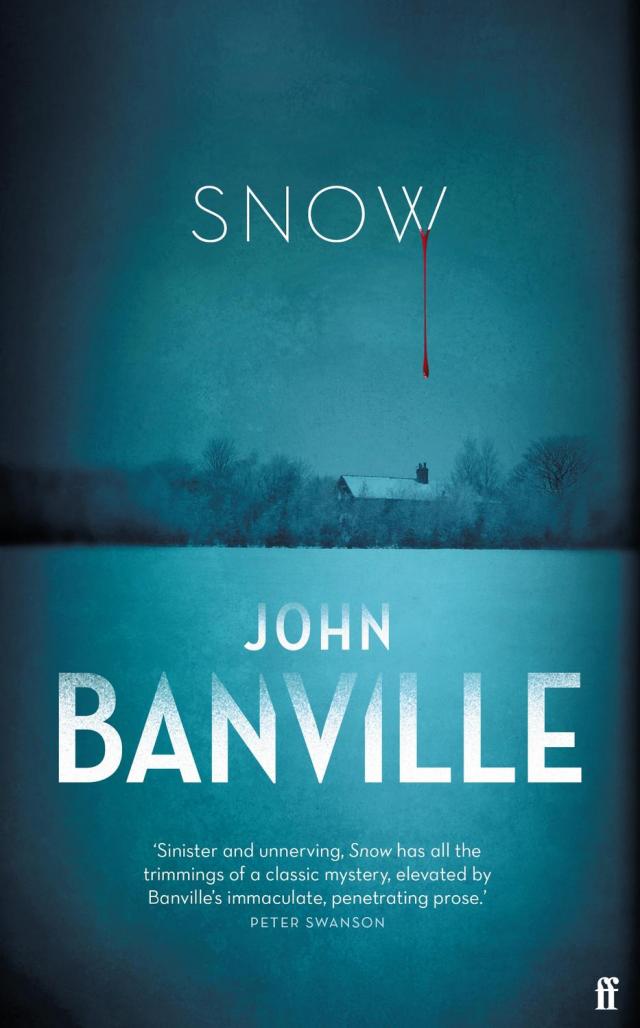
'A typically elegant country house mystery.' Guardian, Biggest books of the Autumn A CrimeReads Most Anticipated Book of 2020'The body is in the library,' Colonel Osborne said. 'Come this way.'Following the discovery of the corpse of a highly respected parish priest at Ballyglass House - the Co. Wexford family seat of the aristocratic, secretive Osborne family - Detective Inspector St John Strafford is called in from Dublin to investigate. Strafford faces obstruction from all angles, but carries on determinedly in his pursuit of the murderer. However, as the snow continues to fall over this ever-expanding mystery, the people of Ballyglass are equally determined to keep their secrets.'The sinister and unnerving Snow has all the trimmings of a classic country house mystery - body in the library, closed circle of suspects, foul weather - all elevated by Banville's immaculate, penetrating prose.'...
Read online
  • 75
Ancient Light act-3

Ancient Light act-3

John Banville

John Banville

The Man Booker Prize-winning author of The Sea gives us a brilliant, profoundly moving new novel about an actor in the twilight of his life and his career: a meditation on love and loss, and on the inscrutable immediacy of the past in our present lives. Is there any difference between memory and invention? That is the question that fuels this stunning novel, written with the depth of character, the clarifying lyricism, and the heart-wrenching humor that have marked all of John Banville’s extraordinary works. And it is the question that haunts Alexander Cleave as he plumbs the memories of his first—and perhaps only—love (he, just fifteen, the woman more than twice his age, the mother of his best friend; the situation impossible, thrilling, devouring, and finally devastating)… and of his daughter, lost to a kind of madness of mind and heart that Cleave can only fail to understand. When his stunted acting career is suddenly, inexplicably revived with a movie role portraying a man who may not be who he says he is, his young leading lady—famous and fragile—unwittingly gives him the opportunity to see with aching clarity the “chasm that yawns between the doing of a thing and the recollection of what was done.” http://www.youtube.com/watch?v=Tq-oMYIS44o
Read online
  • 66
Shroud

Shroud

John Banville

John Banville

One part Nietzsche, one part Humbert Humbert, and a soupcon of Milton's Lucifer, Axel Vander, the dizzyingly unreliable narrator of John Banville's masterful new novel, is very old, recently widowed, and the bearer of a fearsome reputation as a literary dandy and bully. A product of the Old World, he is also an escapee from its conflagrations, with the wounds to prove it. And everything about him is a lie. Now those lies have been unraveled by a mysterious young woman whom Vander calls "Miss Nemesis." They are to meet in Turin, a city best known for its enigmatic shroud. Is her purpose to destroy Vander or to save him-or simply to show him what lies beneath the shroud in which he has wrapped his life? A splendidly moving exploration of identity, duplicity, and desire, Shroud is Banville's most rapturous performance to date. Alex Vander is a fraud, big-time. An elderly professor of literature and a scholarly writer with an international reputation, he has neither the education nor the petit bourgeois family in Antwerp that he has claimed. As the splenetic narrator of this searching novel by Banville (Eclipse), he admits early on that he has lied about everything in his life, including his identity, which he stole from a friend of his youth whose mysterious death will resonate as the narrator reflects on his past. Having fled Belgium during WWII, he established himself in Arcady, Calif., with his long-suffering wife, whose recent death has unleashed new waves of guilt in the curmudgeonly old man. Guilt and fear have long since turned Vander into a monster of rudeness, violent temper, ugly excess, alcoholism and self-destructiveness. His web of falsehoods has become an anguishing burden, and his sense of displacement ("I am myself and also someone else") threatens to unhinge him altogether. Then comes a letter from a young woman, Cass Cleave, who claims to know all the secrets of his past. Determined to destroy her, an infuriated Vander meets Cass in Turin and discovers she is slightly mad. Even so, he begins to hope that Cass, his nemesis, could be the instrument of his redemption. Banville's lyrical prose, taut with intelligence, explores the issues of identity and morality with which the novel reverberates. At the end, Vander understands that some people in his life had noble motives for keeping secrets, and their sacrifices make the enormity of his deception even more shameful. This bravura performance will stand as one of Banville's best works. A scholar and born liar, the elderly but still contentious Axel Vander is about to have his cover blown when an equally contentious young woman enters his life. Banville's lucky 13th novel.
Read online
  • 64
Nightspawn

Nightspawn

John Banville

John Banville

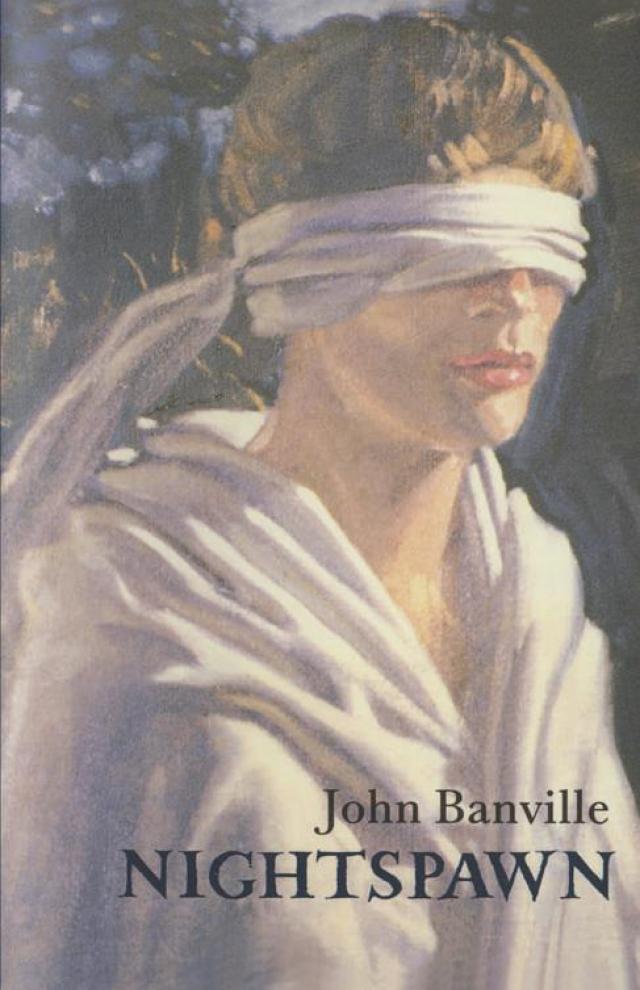
The title of Banville's first novel, Nightspawn (1971), involves a pun: "night spawn," "night's pawn," and "knight's pawn," heralding the ludic nature of the whole book. Nightspawn plays with literary conventions in order to show their exhaustive nature. It is an inside-out novel, one of the very few metanovels to have come out of Ireland. Ben White tells of a coup d'etat in Greece and his embroilment therein. White is a writer and he succeeds in working his account into a gripping thriller. But Nightspawn is anything but a straitlaced thriller; it is a parody of the narrative genre. Most scenes end in farce. Behind all the parodying, the playful turning upside-down of conventions and self-reflexive commenting, there lies a most serious intention: the age-old desire of the artist to express the things in their essence, to transfix beauty and truth. Like Beckett's narrators, White permanently urges himself on 'to express it all.' But he fails, is bound to fail, because every artist must necessarily fail in this respect, beauty and truth defying efforts. 'They took everything from me. Everything.' So says the central character of Nightspawn, John Banville's elusive, first novel, in which the author rehearses now familiar attributes: his humour, ironies, and brilliant knowing. In the arid setting of the Aegean, Ben White indulges in an obsessive quest: to assemble his 'story' and to untangle his relationships with a cast of improbable figures. Banville's subversive, Beckettian fiction embraces themes of freedom and betrayal, and toys with an implausible plot, the stuff of an ordinary 'thriller' shadowed by political intrigue. In this elaborate artifact, Banville's characters 'sometimes lose the meaning of things, and everything is just . . . funny.' There begins their search for 'the magic to combat any force'.
Read online
  • 62
The Book Of Evidence

The Book Of Evidence

John Banville

John Banville

The Book of Evidence is a 1989 novel by the Irish author John Banville. The book is narrated by Freddie Montgomery, a 38 year old scientist, who murders a servant girl during an attempt to steal a painting from a neighbor. Freddie is an aimless drifter, and though he is a perceptive observer of himself and his surroundings, he is largely amoral. The end of the novel makes it unclear whether anything Freddie has said is true. When asked by the inspector how much of it is true, Freddie responds, "True, Inspector? All of it. None of it. Only the shame." The Book of Evidence won Ireland 's Guinness Peat Aviation Award in 1989, and was short-listed for Britain 's Booker Prize. In reviewing the book, Publishers Weekly compared Banville's writing to that of Albert Camus and Fyodor Dostoevsky. The writing style continues Banville's attempt to give his prose "the kind of denseness and thickness that poetry has".
Read online
  • 55
Ghosts

Ghosts

John Banville

John Banville

In this brilliantly haunting new novel, John Banville forges an unforgettable amalgam of enchantment and menace that suggests both The Tempest and his own acclaimed The Book of Evidence. "A surreal and exquisitely lyrical new novel by one of the great stylists writing in English today."--Boston Globe.
Read online
  • 44
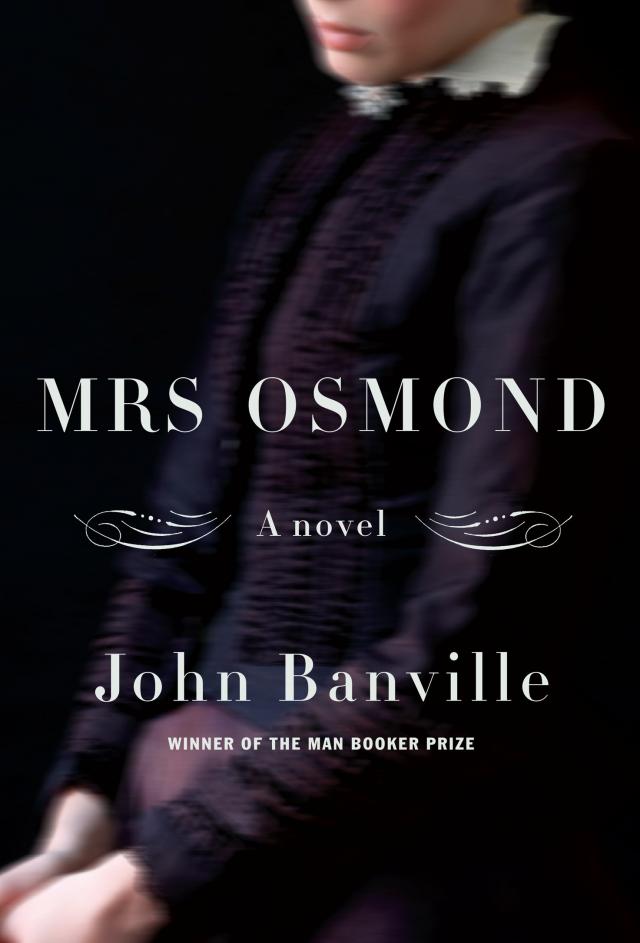
Mrs. Osmond

Mrs. Osmond

John Banville

John Banville

From the Man Booker Prize-winning author of The Sea, a dazzling and audacious new novel that extends the story of Isabel Archer, the heroine of Henry James's The Portrait of a Lady, into unexpected territory.Isabel Archer is a young American woman, swept off to Europe in the late nineteenth century by an aunt who hopes to round out the impetuous but naïve girl's experience of the world. When Isabel comes into a large, unexpected inheritance, she is finagled into a marriage with the charming, penniless, and—as Isabel finds out too late—cruel and deceitful Gilbert Osmond, whose connection to a certain Madame Merle is suspiciously intimate. On a trip to England to visit her cousin Ralph Touchett on his deathbed, Isabel is offered a chance to free herself from the marriage, but nonetheless chooses to return to Italy. Banville follows James's story line to this point, but Mrs. Osmond is thoroughly Banville's own: the narrative...
Read online
  • 40
183