The System of Dante's Hell

The System of Dante's Hell

Amiri Baraka

Poetry / Theater / Nonfiction

"Much of the novel is an expression of the intellectual and moral lost motion of the age...the special agony of the American Negro."—New York Times Book Review"A fevered and impressionistic riff on the struggles of blacks in the urban North and rural South, as told through the prism of The Inferno....Other writers addressed race more directly, but for all its linguistic slipperiness, Baraka's language conveys the feelings of fear, violation, and fury with a surprising potency. A pungent and lyrical portrait of mid-'60s black protest."—Kirkus ReviewsWith a new introduction by Woodie King Jr.This 1965 novel is a remarkable narrative of childhood and youth, structured on the themes of Dante's Inferno: violence, incontinence, fraud, treachery. With a poet's skill Baraka creates the atmosphere of hell, and with dramatic power he reconstructs the brutality of the black slums of Newark, a small Southern town,...
Read online
  • 52
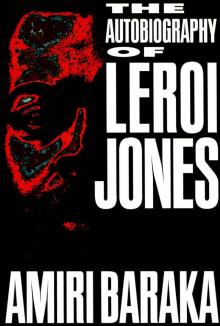
The Autobiography of LeRoi Jones

The Autobiography of LeRoi Jones

Amiri Baraka

Poetry / Theater / Nonfiction

The complete autobiography of a literary legend.Amazon.com ReviewFirst published in 1984, this is a revised edition of The Autobiography of Leroi Jones, which includes the original text (restored by the author) as well as a new introduction. Born Leroi Jones in 1934--he became Amiri Baraka in the mid-1960s---he is one of the seminal figures of contemporary black writing, a poet, playwright, novelist, critic, and political activist. Even more than those labels indicate, however, Baraka has been at the heart of literary and ideological ferment since the 1950s. Early in his career, he was strongly influenced by the Beats. During the cultural upheaval of the Black Arts Movement of the 1960s, he moved uptown to Harlem, changed his name, and embraced a religion that was a hybrid of Islam and traditional African principles. And then, in the 1970s, Baraka turned his back on Black Nationalism and embraced Marxist Leninism. The autobiography, written in Baraka's inimitable style, one that we might call word-jazz, ends there. From Library JournalAlthough this edition of Baraka's autobiography restores substantial cuts made to the original Freundlich Books publication (LJ 1/84), the basic structure of the work remains unchanged: it covers Baraka's youth in Newark, stint in the air force, Beat years in Greenwich Village, role in the Black Arts movement, and conversion from black nationalism to communism around 1974. It is puzzling that this edition continues to disguise key people and publications. For instance, Baraka refers to his ex-wife, Hettie Cohen, as Nellie Kohn; poet Diane DiPrima as Lucia DiBella; and the Partisan Review as the Sectarian Review. What purpose can this obfuscation serve when How I Became Hettie Jones (LJ 2/15/90) has already named names? It will be interesting to see how DiPrima's forthcoming autobiography deals with the same scene. Recommended for libraries lacking the earlier edition.?William Gargan, Brooklyn Coll. Lib., Copyright 1997 Reed Business Information, Inc.
Read online
  • 51
A View from the Bridge

A View from the Bridge

Arthur Miller

Theater

Set on the gritty Brooklyn waterfront, A View from the Bridge follows the cataclysmic downfall of Eddie Carbone, who spends his days as a hardworking longshoreman and his nights at home with his wife, Beatrice, and niece, Catherine. But the routine of his life is interrupted when Beatrice's cousins, illegal immigrants from Italy, arrive in New York. As one of them embarks on a romance with Catherine, Eddie's envy and delusion plays out with devastating consequences.
Read online
  • 50
The Haunted Woman

The Haunted Woman

David Lindsay

Literature & Fiction / Theater

Engaged to a decent but unexceptional man, Isbel Loment, leads an empty life, moving with her aunt from hotel to hotel. She is perverse and prickly with untapped resources of character and sensibility. They explore by chance a strange house and there Isbel meets Judge, its owner; a profoundly disturbing relationship develops and it is from this that the drama unfolds.
Read online
  • 47
Disenchanted

Disenchanted

A. R. Miller

Theater

Things are going good for Keely Fey. Thanks to a rave review in the Iowa Star, bookings are at an all time high at Fey Creations. Until a Talent stealing psycho uses her salon as a personal shopping ground. When all the clues point to her business it’s nearly impossible to convince the authorities she’s not The Collector. Top this off with the reemergence of a childhood friend—an imaginary childhood friend—and some pretty scary changes in her Talents and things go from downhill slide to avalanche.
Read online
  • 41
Of Men and Monsters

Of Men and Monsters

William Tenn

Theater

Giant, technologically superior aliens have conquered Earth, but humankind survives - even flourishes in a way. Men and women live like mice in burrows in the massive walls of the huge homes of the aliens, scurrying about under their feet, stealing from them. A complex social and religious order has evolved, with women preserving knowledge and working as healers, and men serving as warriors and thieves. For the aliens, men and women are just a nuisance, neither civilized nor intelligent, and certainly not a worthy adversary. In fact, they are regarded as vermin, to be exterminated. Which, ironically, may just be humankind's strength and point the way forward.
Read online
  • 35
183