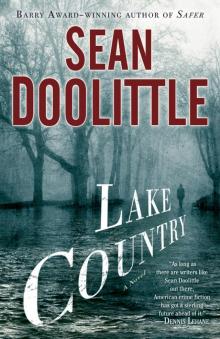
Rain dogs, p.1
Rain Dogs, page 1


Contents
Cover Page
Title Page
Dedication
Epigraph
Prologue
Part 1 Dark Sky
Chapter One
Chapter Two
Chapter Three
Chapter Four
Chapter Five
Chapter Six
Chapter Seven
Chapter Eight
Chapter Nine
Chapter Ten
Part 2 Storm
Chapter Eleven
Chapter Twelve
Chapter Thirteen
Chapter Fourteen
Chapter Fifteen
Chapter Sixteen
Chapter Seventeen
Chapter Eighteen
Chapter Nineteen
Chapter Twenty
Chapter Twenty-one
Chapter Twenty-two
Chapter Twenty-three
Part 3 The Rain Dogs
Chapter Twenty-four
Chapter Twenty-five
Chapter Twenty-six
Chapter Twenty-seven
Chapter Twenty-eight
Chapter Twenty-nine
Chapter Thirty
Chapter Thirty-one
Chapter Thirty-two
Chapter Thirty-three
Chapter Thirty-four
Chapter Thirty-five
Chapter Thirty-six
Chapter Thirty-seven
Chapter Thirty-eight
Chapter Thirty-nine
Chapter Forty
Epilogue
Acknowledgments
About the Author
Also by Sean Doolittle
Preview of The Cleanup
Copyright Page
For
Esther,
Glenn,
Howard,
and Alberta
GIVE MY UMBRELLA TO THE RAIN DOGS
FOR I AM A RAIN DOG, TOO
—TOM WAITS
PROLOGUE
COLEMAN’S LANDING
The offices of Tyler & Tyler sat next to a taxidermy shop with a stuffed coyote in the window. The taxidermist had the bigger awning.
Standing curbside, Tom Coleman considered the attorneys he knew. None had a grip like George Tyler Jr.’s: blunt, callused, crusted with sun spots, knuckle hair like steel wool. He almost said uncle.
“You made it, Tom.”
“Sorry to drop in on you.” He was supposed to have arrived three days ago. Tom wasn’t completely sure what he was doing here now. Yesterday had been his daughter’s fifth birthday, and he’d spent it in a twenty-dollar motel room. Today he felt a dead coyote watching him through cloudy glass. “I should have called.”
“Never mind that, son. Glad you’re here. How was the drive?”
“Long,” Tom said. “But fine.”
“Any trouble finding the place?”
“No trouble.”
Tyler must have been pushing seventy, but he didn’t seem to notice. His weekday business attire appeared to run toward stiff dark blue jeans and Tony Lamas. Tom had caught him on the way out, zipping a windbreaker against the sunny March chill.
“Well, welcome to the Heart City.” Tyler nodded down the empty sidewalk, the quiet street. Downtown Valentine. “Don’t guess it’s quite the speed you’re used to in Chicago.”
As Tom started to respond, a big eighteen-wheeler rumbled past, heading for the highway junction at the end of Main. He started again and was defeated by a pickup pulling an empty horse trailer.
He gave up and nodded at the key ring on Tyler’s finger. “Is this a bad time? I can come back.”
“Do what? Nah. I was just headed down the street for a bite. You hungry?”
Tom wasn’t. Hungover. Getting thirsty. But not hungry.
“Hell, it’s early for lunch.” Tyler clapped him on the shoulder. “Let’s go on in. We’ll get the boring stuff out of the way.”
It sounded like a plan.
There were papers to read and sign. Tom pretended to read them and signed.
They sat in Tyler’s office, one of three small rooms off a small reception area that smelled like new paint. Tyler had a scarred wooden desk cluttered with file folders, a bookcase of legal volumes, a few trout flies in shadow boxes on the walls. They had the place to themselves.
“I’ll have Judy get you copies. She comes in Thursdays.”
“No rush.”
“That one at the bottom.” Tyler pointed to another sheet. “There you go.”
Tom scribbled his signature one last time and slid the entire folder back across the desk. His grandfather’s executor took the folder up, tapped the spine on the desk, and set it aside.
“I wish he’d gotten a few more years,” he said. “Your granddad.”
“He wasn’t too old.” Tom felt like he should say something else, but he didn’t know what.
“Besides the trick pump, I don’t know anything would have killed him. He was a character.”
“Is that the legal term for cranky old bastard?”
Tyler barked a laugh. “Tough as a whip and half as personable, George Senior always said. But I liked him. He was a good man.”
“To tell you the truth, Mr. Tyler, I didn’t really know him all that well.”
As a kid, Tom had spent one summer out here, in the Sandhills, hours west of the Nebraska he knew. He’d earned an allowance doing chores on a cow/calf operation his grandfather had owned at the time. This was several years before his grandmother gave in early to the same cancer that killed Zevon and McQueen. He’d been eleven or twelve years old.
Beyond that summer, twenty-odd years ago, he’d only seen the man on a handful of occasions. Most of what he knew about Parker Coleman he’d gotten through stories from his dad and uncles. He hadn’t even attended the funeral.
“You could say this is unexpected.”
Tyler nodded. “That’s more or less the way your dad put it.”
“Oh?”
“We spoke a bit on the phone the other day.”
“I see.”
“Guess they were thinking of coming out to surprise you. Your mom thought you might use some help settling in.”
Tom sighed. It was a six-hour drive from Lincoln; he’d already told them not to bother. “I should have called.”
Tyler now wore a small, humane smile. Tom knew what was next.
“Son, I can’t say how sorry I was to hear about your little girl.”
“Thank you.”
“I have a niece in Dallas. She and her husband lost a boy the same way.”
“I’m sorry to hear that,” Tom said. “I truly am.”
“It’s an awful thing.”
“Is there anything else I need to sign?”
Tyler lingered a moment and shook his head. “Nope, we’re done. One last thing.” He picked up a plain white envelope and handed it across. “Your granddad left instructions to pass this along when the time came. Guess that’s now.”
Tom held the sealed envelope to the light. He tore off an end and slipped a single sheet of lined notebook paper from inside. The paper still had an edge of fuzz where it had been ripped from a spiral binding. He unfolded the page and saw lines of spiky blue ink, one running bulk of a paragraph. The man had written it just over a year ago.
Thomas,
You’re burying your little one today. Expect your heart is broke and I’m goddamn sorry as hell. Like to say I wish I was there but I don’t. Older I get the less I can stand people. Guess this river is probably the best place for an old rain dog like me. Maybe you don’t want a goddamn thing to do with it. Anyway, you get the land and the buildings and the truck, do what you want. I’m in the ground either way. Don’t have much else to say. Good luck to you, boy.
PC
He read the note a couple of times. When he was finished, he didn’t know how he felt. He didn’t know how he was supposed to feel. He looked up and found George Tyler Jr. watching him.
Tom said, “Truck?”
“Sorry?”
“There’s a truck?”
“Your granddad’s pickup. Didn’t I mention it?”
Tom couldn’t remember if Tyler had or hadn’t.
“Well, there’s a truck. Can’t promise it’s much of a truck, but there’s a truck.”
“Oh.”
After a few moments of silence, the attorney rose. He opened a drawer, took out another ring of keys, and said, “Guess you’re probably anxious to go have a look at the place.”
There wasn’t much to look at for most of the drive.
Tom followed George Tyler Jr. almost twenty miles along the tar-patched stretch of highway leading east out of town. They finally turned south at a town called Sparks. Tom saw the sign, but he didn’t see the town.
Tyler took a county road through an open gate, bouncing over a handful of iron bars set parallel over a trench in the ground. Tom remembered his grandfather calling them autogates; they were designed to keep livestock from crossing. Ranchers installed them all over this area where fence lines paused for road.
The road turned to gravel, then bare dry sand, narrowing as it curled through pasture toward lower ground. Grazed scrub turned to taller grass.
Then trees. They entered a tunnel of elms and oaks and hackberries, all beginning to bud with new leaves. Within the next couple of miles, Tom saw paper birch growing next to tall fir and pine.
According to the brochure he’d taken from a wire rack in the front office of the motel, this leg of the Niobrara flowed twenty-eight miles through a state park an d a federal wildlife refuge. Ecosystems jumbled in the river valley, from western to eastern forest and prairie between.
According to the brochure, if you liked getting away outdoors, the Scenic Niobrara River was for you. Wildlife abounded. Waterfalls cascaded. A child could navigate the diciest of the rapids between the put-in below Cornell Dam and his grandfather’s place at the end of the run.
The wildlife Tom had spotted from the car consisted of polled steers and a rabbit. A smashed turtle. A few birds. He hadn’t really been looking. Every mile or two now, they passed a weather-beaten shingle for one of the other outfitters along the bank.
Tyler took a cut off the main road, and they came to a pine rail arch. A big splintered sign welcomed them to Coleman’s Landing. An arrow labeled CAMPGROUND pointed toward a right fork; the arrow pointing left said ARRIVAL CENTER—CANOE/KAYAK/TUBE RENTAL * FIREWOOD * CONCESSIONS * GEAR & GIFTS.
Tom heard the river, and then he saw it, flat water tumbling over a ford of jagged bedrock and driftwood limbs. They followed a bend around a curtain of trees to a parking lot topped with crushed rock. Tom could smell the water when he got out of the car.
“I’ve never been here,” he said. “Pretty.”
“Water’s low,” Tyler said. “Awful drought, last few years. Folks were hoping for a big snow this winter. Didn’t get one.”
“Oh.”
“Not sure who belongs to that one.” Tyler indicated a third car parked in the lot: a rusted Subaru Brat with a camper shell and no hubcaps, IN TRANSIT tags instead of plates. The Sube sat near what appeared to be a mini school bus that had been painted silver, hitched to pull an aluminum trailer.
“Which one’s the truck?”
“Truck ain’t as nice as either of those.” Tyler nodded at the bus. “And that’s the only one belongs here. Take a load off if you want. I’ll go see what’s what.”
Tom didn’t feel like waiting around in the parking lot. He went with Tyler up a cedar chip path.
The main building sat back on a small rise overlooking the ford; it looked to Tom like a cross between a farmhouse and a ski lodge with a long covered deck added on. He saw a couple of sheds and what looked like a small bunkhouse farther back in the trees.
He also saw a row of canoes turned up on the ground outside one of the sheds, aluminum keels glinting in the sun. The shed’s sliding door had been rolled open; loud classic rock drifted from inside.
A guy in cutoffs emerged with a coil of rope in the crook of his elbow. He wore flip-flop sandals and a red bandana pirate-style on his head. He saw them coming and stopped what he was doing.
“Afternoon,” Tyler called.
The guy raised a hand. Up close, he aged a decade from Tom’s initial guess. His eyes looked pink, slightly shot.
“You work here, son?”
“Little as possible.” A grin. “What can I do for you guys?”
Tyler glanced at Tom. “Sorry, I didn’t get your name.”
“I’m Duane.”
“Duane who again?”
“Foster. If you’re looking for the owner, he’s not here right now. I just got here myself.”
“Just got here from where?”
Foster narrowed his eyes. “Omaha. Is there a problem?”
Tom didn’t know why he felt like he should jump in. “I’m Tom Coleman.”
“Hi.”
“Your boss was my grandfather.”
“Was?”
“Heart attack,” Tyler said. “Three weeks ago. I’m sorry, son, I thought Park’s employees had been notified.”
Foster looked at the loop of rope on his arm. He looked out at the river. He looked at Tom.
“Damn,” he said.
Before dark, Tom left Foster at the bunkhouse smoking a joint in a hammock strung between two old elms.
His new truck was an old F-150 with creaky suspension, rust holes in the fenders, and a red paint job long faded pink by the sun. They’d found it parked at one of the campgrounds, weeds already growing up around the tires. The truck looked like hell but seemed to run fine. At least it started on the first try.
He found a narrow stretch of old buckled pavement and kept to it, winding into the Sandhills. In the valleys, big dunes rose up around the cab, scrub-covered hulks that blotted the view of all but the road ahead.
Tom climbed to a high point and parked in the bunchgrass alongside the road. He pulled his flask and climbed up the bumper, onto the warm hood. He leaned back against the windshield and looked at the darkening sky.
It felt like nothing but sky here. No buildings, hardly a tree—just a kingdom of grass in all directions, a world of sky meeting the low horizon all around.
He still remembered the feeling he’d had here as a kid. A vague terror somewhere in his blood.
He remembered a summer rainstorm that rolled in late one afternoon. He’d been out on the range fixing fences with his grandfather, miles from anything, when massive black thunderheads the size of continents seemed to rise out of the prairie and cover them over fast. He’d felt the dark sky lowering as if to crush them; he’d cowered reflexively, grinding his teeth and gripping his elbows as they’d waited out the pounding storm in the truck. Tom remembered his grandfather smoking Winstons and humming to himself as the thunder rumbled over them.
On clear days, blue sky towered like an ocean. Tom remembered that he used to avoid looking up; he remembered the irrational, overwhelming sense that he might float up, untethered and helpless, until he disappeared into the clouds.
Somehow, back amongst these strange rolling dunes, looking up into this sky for the first time since that summer as a boy, the idea of floating away didn’t seem so bad.
He thought about Melissa. She’d already been to the cemetery before he’d left town; he’d recognized the fresh clutch of white Gerber daisies she’d left on the grave. He wondered how she’d spent the rest of the day.
He’d finally called, from a filling station on the Iowa side of the Quad Cities, just because he couldn’t shake the feeling that he should. He’d left the number to his grandfather’s place on her machine, but he doubted she’d use it.
Tom wondered what he’d tell her if she did. Found a great job. The sky’s the limit.
Stars begin to flicker in the purple nothing above. His dad always said they were better out here. Tom tipped the flask and watched, knowing the truth.
They were the same here as anywhere. He was just in a different spot.
If she called, he guessed he’d tell her he’d moved.
PART
1
DARK SKY
ONE
His first year at the paper, the best lead Tom wrote went like this:
If Warren Giles had taken his coffee black on the morning of November 12, the .45-caliber ricochet that killed him might have ruined the Starbucks sugar counter instead of his aorta.
The best editor he’d ever had sent that story back after rewriting the first sentence this way:
If Tom Coleman hadn’t dreamed of writing sappy features, he might have made an okay cop reporter.
Translation: The story is what happened. Not what might have happened if.
In explaining a thing or two about good writing to a newsman from the cold type days, Tom had managed to argue his way out of his first byline. It hadn’t seemed fair at the time.
Joyce Coleman hit the Coleman’s Landing like a Pine-Sol tornado the first week in May.
Tom walked down the hill to meet his folks when he heard their car roll in. At the foot of the cedar chip path, his mother doffed her carryall, pulled him down by the neck, and squeezed the breath out of him.
“Hi, Mom.”
“My son the river rat.”
He stood there, bent. “You’re crushing my windpipe.”
She pushed back to arm’s length. “Let me see you.”
Tom nodded to his dad, who brought up the rear a few steps behind. His mother touched a warm palm to his stubble.
“You should shave,” she said.
“Thanks.”
“And shower.” She patted his cheek.
Then she was off.
Within the half hour, she’d thrown open every window and started emptying cupboards. Tom walked back down the hill with his dad to bring up luggage.