The Lion of Boaz-Jachin and Jachin-Boaz

The Lion of Boaz-Jachin and Jachin-Boaz

Russell Hoban

Children's Books / Science Fiction & Fantasy / Literature & Fiction

There were no more lions any more. There had been lions once. Sometimes in the shimmer of of the heat on the plains the motion of their running still flickered on the dry wind – tawny, great and quickly gone. Sometimes the honey-coloured moon shivered to the silence of a ghost-roar on the rising air. Jachin-Boaz lives in a dusty town where he owns a shop that sells all kinds of maps: maps to find water, love, money, whatever the heart desires. He has a son, Boaz-Jachin, for whom he is making him a master-map that will be given to him when he is a man. This map that will contain all the secrets of the other maps combined, so that he will be able to find whatever he wishes to seek. Jachin-Boaz shows his son the map, a labor of love representing years of his life spent upon it. Rhetorically he asks, ‘What can you seek that this map will not show you how to find?’ ‘A lion?’ asks Boaz-Jachin. Disappointed, the father responds: ‘A lion. I don’t think I understand you. I don’t think you’re being serious with me. You know very well there are no lions now.’ But then Jachin-Boaz leaves home, abandoning his wife and son and taking the master-map. He leaves a note which reads ‘I have gone to look for a lion.’ In the desert outside the town, there is a palace where the last king is entombed, his lion hunt carved in stone. Boaz-Jachin, who has decided to seek out his father and ask for the map, takes a bus to the palace where he makes a powerful connection with the image of the dying lion carved in stone. Through a simple act of sympathetic magic, the son loosens the spears and sets the lion’s spirit free, then begins his journey across land and sea to find his father.
Read online
  • 297
Turtle Diary

Turtle Diary

Russell Hoban

Children's Books / Science Fiction & Fantasy / Literature & Fiction

Life in a city can be atomizing, isolating. And it certainly is for William G. and Neaera H., the strangers at the center of Russell Hoban’s surprisingly heartwarming novel Turtle Diary. William, a clerk at a used-book store, lives in a rooming house after a divorce that has left him without home or family. Neaera is a successful writer of children’s books, who, in her own estimation, “looks like the sort of spinster who doesn’t keep cats and is not a vegetarian. Looks…like a man’s woman who hasn’t got a man.” Entirely unknown to each other, they are both drawn to the turtle tank at the London zoo with “minds full of turtle thoughts,” wondering how the turtles might be freed. And then comes the day when Neaera walks into William’s bookstore, and together they form an unlikely partnership to make what seemed a crazy dream become a reality.
Read online
  • 215
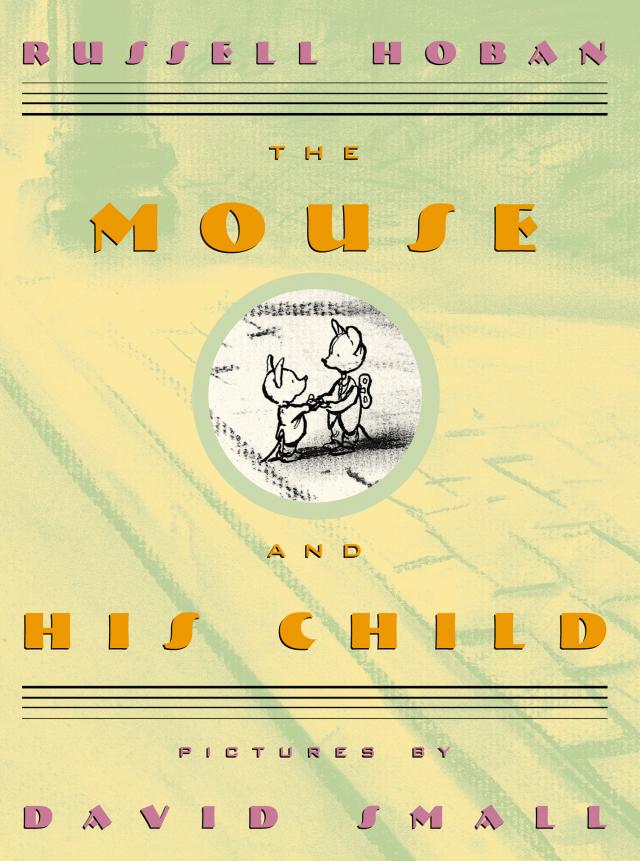
The Mouse and His Child

The Mouse and His Child

Russell Hoban

Children's Books / Science Fiction & Fantasy / Literature & Fiction

"What are we, Papa?" the toy mouse child asked his father. "I don't know," the father answered. "We must wait and see." A tin father and son dance under a Christmas tree until they break ancient clock-work rules and are themselves broken. Discarded, rescued, repaired by a tramp, they quest for dream of a family and a place of their own - magnificent doll house, plush elephant, and tin seal remembered from a toy shop.
Read online
  • 185
Medusa Frequency

Medusa Frequency

Russell Hoban

Children's Books / Science Fiction & Fantasy / Literature & Fiction

An inexplicable message flashed onto the screen of his Apple II computer at 3 a.m. heralds the beginning of a startling quest for frustrated author Herman Orff. Taking up the offer of a cure for writer's block leads him 'to those places in your head that you can't get to on your own' - and plunges him into a semi-dreamland inhabited by a bizarre combination of characters from myth and reality: the talking head of Orpheus; a lost love; the young girl of Vermeer's famous portrait - and a frequency of Medusas.From Publishers WeeklyAgain demonstrating the versatility and creative energy exhibited in Riddley Walker and Pilgermann, in this slim novel Hoban deals with existential questions: the mystery of existence, the nature of reality, the role of art. Combining satire and fantasy, and in poetic, Joycean language mixed with the vernacular, this narrative rewards the discerning reader. Herman Orff, a failed novelist who supports himself by doing cartoons for Classic Comics, is accosted by the blind head of Orpheus, his progenitor, "the first of your line." Through a series of metaphysical communications that lead to an odyssey through London and Amsterdam, Orff is gradually given to understand the connection between the women in his life: his lost love Luise von Himmelbett (symbolizing Eurydice); the nubile and very available Melanie Falsepercy (symbolizing Persephone); the print of Vermeer's Head of a Young Girl that hangs above his desk and haunts his imagination; and the head of Medusa in a painting by the Dutch master Frans Post: all represent "femaleness." Spare and witty, full of metaphorical, mythical and mystical allusions, the narrative sings with insights. At the same time whimsical, farcical (an advertising agency is called Slithe and Tovey) and deadly serious, it brilliantly relates the tragic ancient myths to the commonplace tragedies of modern life in a violent, dislocated age. Copyright 1987 Reed Business Information, Inc. From Library JournalWhen his creative juices dry up, writer Herman Orff abandons serious novels for comic books. In despair, he tries an acquaintance's electronic device for brain galvanizing and is rewarded by several strange visions of the head of Orpheus, with whom Orff and other characters in the novel are obsessed. Orff's conversations with the head give him a clear understanding of his past and of what being human is, demonstrating the true import of the book: how art acts on and makes sense of experience, which can be fully perceived only whenlike Eurydiceit is lost entirely. An interesting but mannered retelling of the Orpheus myth. Laurence Hull, Cannon Memorial Lib., Concord, N.C.Copyright 1987 Reed Business Information, Inc.
Read online
  • 42
183