

O henry for the holidays, p.1
O. Henry for the Holidays, page 1
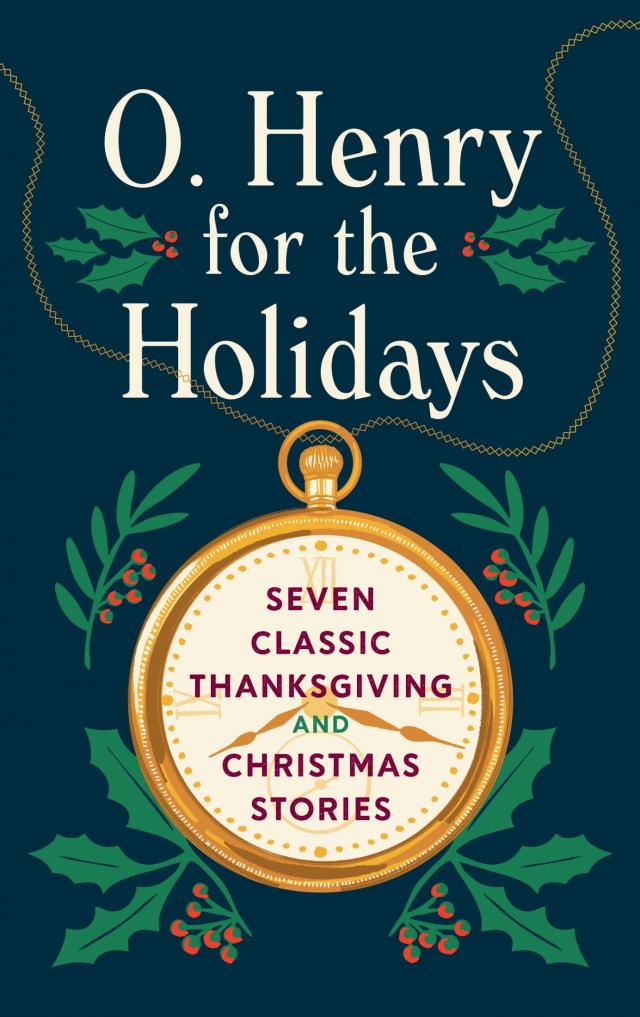


O. HENRY FOR THE HOLIDAYS
Volume compilation copyright © 2025 by
Literary Classics of the United States, Inc., New York, NY
All rights reserved.
Published in the United States by Library of America,
14 East 60th Street, New York, NY 10022.
Visit our website at www.loa.org.
No part of this book may be reproduced in any manner whatsoever without the permission of the publisher, except in the case of brief quotations embodied in critical articles and reviews.
Distributed to the trade in the United States
by Penguin Random House Inc.
and in Canada by Penguin Random House Canada Ltd.
The authorized representative in the EU for product safety
and compliance is eucomply OÜ, Pärnu mnt 139b-14,
11317 Tallinn, Estonia.
hello@eucompliancepartner.com
ISBN 978–1–59853–833–5
eISBN 978–1–59853–834–2
The Purple Dress
Two Thanksgiving Day Gentlemen
Whistling Dick’s Christmas Stocking
A Chaparral Christmas Gift
Christmas by Injunction
The Gift of the Magi
Compliments of the Season
About the Author
About the Stories
O. HENRY FOR THE HOLIDAYS
We are to consider the shade known as purple. It is a color justly in repute among the sons and daughters of man. Emperors claim it for their especial dye. Good fellows everywhere seek to bring their noses to the genial hue that follows the commingling of the red and blue. We say of princes that they are born to the purple; and no doubt they are, for the colic tinges their faces with the royal tint equally with the snub-nosed countenance of a woodchopper’s brat. All women love it—when it is the fashion.
And now purple is being worn. You notice it on the streets. Of course other colors are quite stylish as well—in fact, I saw a lovely thing the other day in olive green albatross, with a triple-lapped flounce skirt trimmed with insert squares of silk, and a draped fichu of lace opening over a shirred vest and double puff sleeves with a lace band holding two gathered frills—but you see lots of purple too. Oh, yes, you do; just take a walk down Twenty-third street any afternoon.
Therefore Maida—the girl with the big brown eyes and cinnamon-colored hair in the Bee-Hive Store—said to Grace—the girl with the rhinestone brooch and pepperment-pepsin flavor to her speech—“I’m going to have a purple dress—a tailor-made purple dress—for Thanksgiving.”
“Oh, are you,” said Grace, putting away some 7½ gloves into the 6¾ box. “Well, it’s red for me. You see more red on Fifth avenue. And the men all seem to like it.”
“I like purple best,” said Maida. “And old Schlegel has promised to make it for $8. It’s going to be lovely. I’m going to have a plaited skirt and a blouse coat trimmed with a band of galloon under a white cloth collar with two rows of—”
“Sly boots!” said Grace with an educated wink.
“—soutache braid over a surpliced white vest; and a plaited basque and—”
“Sly boots—sly boots!” repeated Grace.
“—plaited gigot sleeves with a drawn velvet ribbon over an inside cuff. What do you mean by saying that?”
“You think Mr. Ramsay likes purple. I heard him say yesterday he thought some of the dark shades of red were stunning.”
“I don’t care,” said Maida. “I prefer purple, and them that don’t like it can just take the other side of the street.”
Which suggests the thought that after all, the followers of purple may be subject to slight delusions. Danger is near when a maiden thinks she can wear purple regardless of complexions and opinions; and when Emperors think their purple robes will wear forever.
Maida had saved $18 after eight months of economy; and this had bought the goods for the purple dress and paid Schlegel $4 on the making of it. On the day before Thanksgiving she would have just enough to pay the remaining $4. And then for a holiday in a new dress—can earth offer anything more enchanting?
Old Bachman, the proprietor of the Bee-Hive Store, always gave a Thanksgiving dinner to his employees. On every one of the subsequent 364 days, excusing Sundays, he would remind them of the joys of the past banquet and the hopes of the coming ones, thus inciting them to increased enthusiasm in work. The dinner was given in the store on one of the long tables in the middle of the room. They tacked wrapping paper over the front windows; and the turkeys and other good things were brought in the back way from the restaurant on the corner. You will perceive that the Bee-Hive was not a fashionable department store, with escalators and pompadours. It was almost small enough to be called an emporium; and you could actually go in there and get waited on and walk out again. And always at the Thanksgiving dinners Mr. Ramsay—
Oh, bother! I should have mentioned Mr. Ramsay first of all. He is more important than purple or green, or even the red cranberry sauce.
Mr. Ramsay was the head clerk; and as far as I am concerned I am for him. He never pinched the girls’ arms when he passed them in dark corners of the store; and when he told them stories when business was dull and the girls giggled and said: “Oh, pshaw!” it wasn’t G. Bernard they meant at all. Besides being a gentleman, Mr. Ramsay was queer and original in other ways. He was a health crank, and believed that people should never eat anything that was good for them. He was violently opposed to anybody being comfortable, and coming in out of snow storms, or wearing overshoes, or taking medicine, or coddling themselves in any way. Every one of the ten girls in the store had little pork-chop-and-fried-onion dreams every night of becoming Mrs. Ramsay. For, next year old Bachman was going to take him in for a partner. And each one of them knew that if she should catch him she would knock those cranky health notions of his sky high before the wedding cake indigestion was over.
Mr. Ramsay was master of ceremonies at the dinners. Always they had two Italians in to play a violin and harp and had a little dance in the store.
And here were two dresses being conceived to charm Ramsay—one purple and the other red. Of course, the other eight girls were going to have dresses too, but they didn’t count. Very likely they’d wear some shirt-waist-and-black-skirt-affairs—nothing as resplendent as purple or red.
Grace had saved her money, too. She was going to buy her dress ready-made. “Oh, what’s the use of bothering with a tailor—when you’ve got a figger it’s easy to get a fit—the ready-made are intended for a perfect figger—except I have to have ’em all taken in at the waist—the average figger is so large waisted.”
The night before Thanksgiving came. Maida hurried home, keen and bright with the thoughts of the blessed morrow. Her thoughts were of purple, but they were white themselves—the joyous enthusiasm of the young for the pleasures that youth must have or wither. She knew purple would become her, and—for the thousandth time she tried to assure herself that it was purple Mr. Ramsay said he liked and not red. She was going home first to get the $4 wrapped in a piece of tissue paper in the bottom drawer of her dresser, and then she was going to pay Schlegel and take the dress home herself.
Grace lived in the same house. She occupied the hall room above Maida’s.
At home Maida found clamor and confusion. The landlady’s tongue clattering sourly in the halls like a churn dasher dabbling in buttermilk. And then Grace came down to her room crying with eyes as red as any dress.
“She says I’ve got to get out,” said Grace. “The old beast. Because I owe her $4. She’s put my trunk in the hall and locked the door. I can’t go anywhere else. I haven’t got a cent of money.”
“You had some yesterday,” said Maida.
“I paid it on my dress,” said Grace. “I thought she’d wait till next week for the rent.”
Sniffle, sniffle, sob, sniffle.
Out came—out it had to come—Maida’s $4.
“You blessed darling,” cried Grace, now a rainbow instead of sunset. “I’ll pay the mean old thing and then I’m going to try on my dress. I think it’s heavenly. Come up and look at it. I’ll pay the money back, a dollar a week—honest I will.”
Thanksgiving.
The dinner was to be at noon. At a quarter to twelve Grace switched into Maida’s room. Yes, she looked charming. Red was her color. Maida sat by the window in her old cheviot skirt and blue waist darning a st—. Oh, doing fancy work.
“Why, goodness me! ain’t you dressed yet?” shrilled the red one. “How does it fit in the back? Don’t you think these velvet tabs look awful swell? Why ain’t you dressed, Maida?”
“My dress didn’t get finished in time,” said Maida. “I’m not going to the dinner.”
“That’s too bad. Why, I’m awful sorry Maida. Why don’t you put on anything and come along—it’s just the store folks, you know, and they won’t mind.”
“I was set on my purple,” said Maida. “If I can’t have it I won’t go at all. Don’t bother about me. Run along or you’ll be late. You look awful nice in red.”
At her window Maida sat through the long morning and past the time of the dinner at the store. In her mind she could hear the girls shrieking over a pull-bone, could hear old Bachman’s roar over his own deeply-concealed jokes, could see the di
At four in the afternoon, with an expressionless face and a lifeless air she slowly made her way to Schlegel’s shop and told him she could not pay the $4 due on the dress.
“Gott!” cried Schlegel, angrily. “For what do you look so glum? Take him away. He is ready. Pay me some time. Haf I not seen you pass mine shop every day in two years? If I make clothes is it that I do not know how to read beoples because? You will pay me some time when you can. Take him away. He is made goot; and if you look bretty in him all right. So. Pay me when you can.”
Maida breathed a millionth part of the thanks in her heart, and hurried away with her dress. As she left the shop a smart dash of rain struck upon her face. She smiled and did not feel it.
Ladies who shop in carriages, you do not understand. Girls whose wardrobes are charged to the old man’s account, you cannot begin to comprehend—you could not understand why Maida did not feel the cold dash of the Thanksgiving rain.
At five o’clock she went out upon the street wearing her purple dress. The rain had increased, and it beat down upon her in a steady, wind-blown pour. People were scurrying home and to cars with close-held umbrellas and tight buttoned raincoats. Many of them turned their heads to marvel at this beautiful, serene, happy-eyed girl in the purple dress walking through the storm as though she were strolling in a garden under summer skies.
I say you do not understand it, ladies of the full purse and varied wardrobe. You do not know what it is to live with a perpetual longing for pretty things—to starve eight months in order to bring a purple dress and a holiday together. What difference if it rained, hailed, blew, snowed, cycloned?
Maida had no umbrella nor overshoes. She had her purple dress and she walked abroad. Let the elements do their worst. A starved heart must have one crumb during a year. The rain ran down and dripped from her fingers.
Some one turned a corner and blocked her way. She looked up into Mr. Ramsay’s eyes, sparkling with admiration and interest.
“Why, Miss Maida,” said he, “you look simply magnificent in your new dress. I was greatly disappointed not to see you at our dinner. And of all the girls I ever knew, you show the greatest sense and intelligence. There is nothing more healthful and invigorating than braving the weather as you are doing. May I walk with you?”
And Maida blushed and sneezed.
There is one day that is ours. There is one day when all we Americans who are not self-made go back to the old home to eat saleratus biscuits and marvel how much nearer to the porch the old pump looks than it use to. Bless the day. President Roosevelt gives it to us. We hear some talk of the Puritans, but don’t just remember who they were. Bet we can lick ’em, anyhow, if they try to land again. Plymouth Rocks? Well, that sounds more familiar. Lots of us have had to come down to hens since the Turkey Trust got its work in. Bet somebody in Washington is leaking out advance information to ’em about these Thanksgiving proclamations.
The big city east of the cranberry bogs has made Thanksgiving Day an institution. The last Thursday in November is the only day in the year on which it recognizes the part of America lying across the ferries. It is the one day that is purely American. Yes, a day of celebration, exclusively American.
And now for the story which is to prove to you that we have traditions on this side of the ocean that are becoming older at a much rapider rate than those of England are—thanks to our git-up and enterprise.
Stuffy Pete took his seat on the third bench to the right as you enter Union Square from the east, at the walk opposite the fountain. Every Thanksgiving Day for nine years he had taken his seat there promptly at 1 o’clock. For every time he had done so things had happened to him—Charles Dickensy things that swelled his waistcoat above his heart, and equally on the other side.
But to-day Stuffy Pete’s appearance at the annual trysting place seemed to have been rather the result of habit than of the yearly hunger which, as the philanthropists seem to think, afflicts the poor at such extended intervals.
Certainly Pete was not hungry. He had just come from a feast that had left him of his powers barely those of respiration and locomotion. His eyes were like two pale gooseberries firmly imbedded in a swollen and gravy-smeared mask of putty. His breath came in short wheezes; a senatorial roll of adipose tissue denied a fashionable set to his upturned coat collar. Buttons that had been sewed upon his clothes by kind Salvation fingers a week before flew like popcorn, strewing the earth around him. Ragged he was, with a split shirt front open to the wishbone; but the November breeze, carrying fine snowflakes, brought him only a grateful coolness. For Stuffy Pete was overcharged with the caloric produced by a super-bountiful dinner, beginning with oysters and ending with plum pudding, and including (it seemed to him) all the roast turkey and baked potatoes and chicken salad and squash pie and ice cream in the world. Wherefore he sat, gorged, and gazed upon the world with after-dinner contempt.
The meal had been an unexpected one. He was passing a red brick mansion near the beginning of Fifth avenue, in which lived two old ladies of ancient family and a reverence for traditions. They even denied the existence of New York, and believed that Thanksgiving Day was declared solely for Washington Square. One of their traditional habits was to station a servant at the postern gate with orders to admit the first hungry wayfarer that came along after the hour of noon had struck, and banquet him to a finish. Stuffy Pete happened to pass by on his way to the park, and the seneschals gathered him in and upheld the custom of the castle.
After Stuffy Pete had gazed straight before him for ten minutes he was conscious of a desire for a more varied field of vision. With a tremendous effort he moved his head slowly to the left. And then his eyes bulged out fearfully, and his breath ceased, and the rought-shod ends of his short legs wriggled and rustled on the gravel.
For the Old Gentleman was coming across Fourth avenue toward his bench.
Every Thanksgiving Day for nine years the Old Gentleman had come there and found Stuffy Pete on his bench. That was a thing that the Old Gentleman was trying to make a tradition of. Every Thanksgiving Day for nine years he had found Stuffy there, and had led him to a restaurant and watched him eat a big dinner. They do those things in England unconsciously. But this is a young country, and nine years is not so bad. The Old Gentleman was a staunch American patriot, and considered himself a pioneer in American tradition. In order to become picturesque we must keep on doing one thing for a long time without ever letting it get away from us. Something like collecting the weekly dimes in industrial insurance. Or cleaning the streets.
The Old Gentleman moved, straight and stately, toward the Institution that he was rearing. Truly, the annual feeding of Stuffy Pete was nothing national in its character, such as the Magna Charta or jam for breakfast was in England. But it was a step. It was almost feudal. It showed, at least, that a Custom was not impossible to New Y—ahem!—America.
The Old Gentleman was thin and tall and sixty. He was dressed all in black, and wore the old-fashioned kind of glasses that won’t stay on your nose. His hair was whiter and thinner than it had been last year, and he seemed to make more use of his big, knobby cane with the crooked handle.
As his established benefactor came up Stuffy wheezed and shuddered like some woman’s over-fat pug when a street dog bristles up at him. He would have flown, but all the skill of Santos-Dumont could not have separated him from his bench. Well had the myrmidons of the two old ladies done their work.
“Good morning,” said the Old Gentleman. “I am glad to perceive that the vicissitudes of another year have spared you to move in health about the beautiful world. For that blessing alone this day of thanksgiving is well proclaimed to each of us. If you will come with me, my man, I will provide you with a dinner that should make your physical being accord with the mental.”
That is what the Old Gentleman said every time. Every Thanksgiving Day for nine years. The words themselves almost formed an Institution. Nothing could be compared with them except the Declaration of Independence. Always before they had been music in Stuffy’s ears. But now he looked up at the Old Gentleman’s face with tearful agony in his own. The fine snow almost sizzled when it fell upon his perspiring brow. But the Old Gentleman shivered a little and turned his back to the wind.






