Memories of the Ford Administration

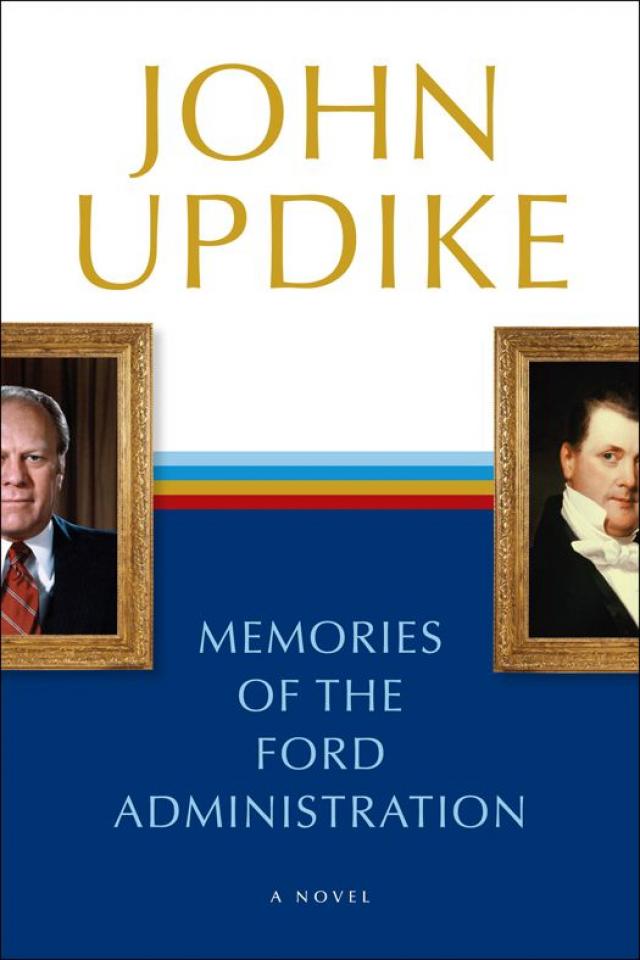
Memories of the Ford Administration

John Updike

Fiction

When historian Alfred “Alf” Clayton is invited by an academic journal to record his impressions of the Gerald R. Ford Administration (1974–77), he recalls not the political events of the time but rather a turbulent period of his own sexual past. Alf’s highly idiosyncratic contribution to Retrospect consists not only of reams of unbuttoned personal history but also of pages from an unpublished project of the time, a chronicle of the presidency of James Buchanan (1857–61). The alternating texts mirror each other and tell a story in counterpoint, a frequently hilarious comedy of manners contrasting the erotic etiquette and social dictions of antebellum Washington with those of late-twentieth-century southern New Hampshire. Alf’s style is Nabokovian. His obsessions are vintage Updike.
Read online
  • 282
The Music School: Short Stories

The Music School: Short Stories

John Updike

Fiction

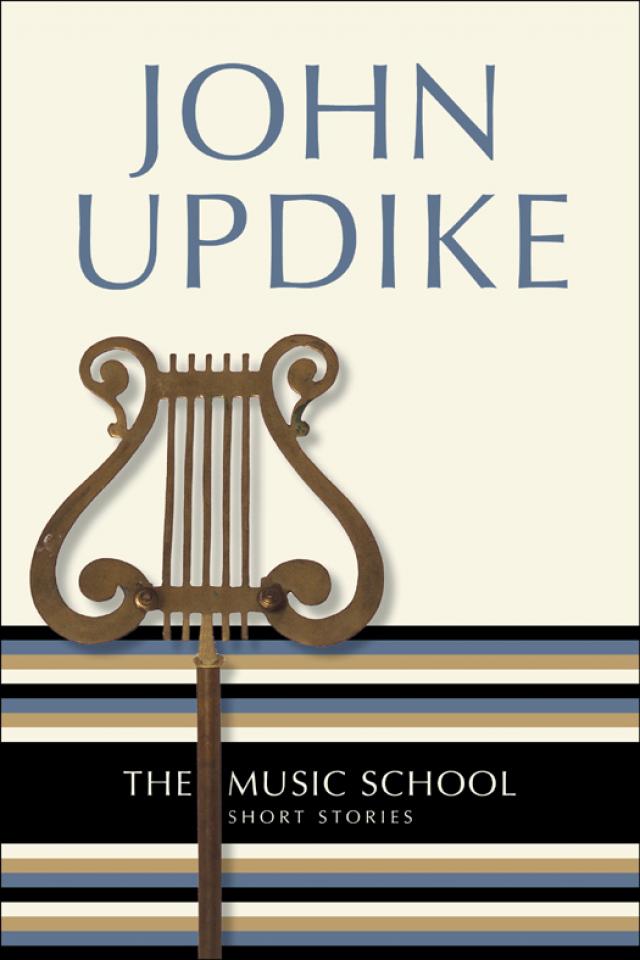
The Music School is a place of learning, in which a sheltered South Dakota boy meets his roommate at Harvard, a rebel with whom he will have a violent—and ambiguous—physical encounter; a warring married couple, Richard and Joan Maple, try and try again to find solace in sex; and Henry Bech, an unprolific American writer publicizing himself far from home, enjoys a moment of improbable, poignant, untranslatable connection with a Bulgarian poetess. In these twenty short stories, each evidence of his early mastery, John Updike brings us a world—a world of fumbling, pausing, and beginning again; a world sensitively felt and lovingly expressed; a world whose pianissimo harmonies demand new subtleties of fictional form.
Read online
  • 264
Terrorist

Terrorist

John Updike

Fiction

The terrorist of John Updike’s title is eighteen-year-old Ahmad Ashmawy Mulloy, the son of an Irish American mother and an Egyptian father who disappeared when he was three. Devoted to Allah and to the Qur’an as expounded by the imam of his neighborhood mosque, Ahmad feels his faith threatened by the materialistic, hedonistic society he sees around him in the slumping New Jersey factory town of New Prospect. Neither Jack Levy, his life-weary guidance counselor at Central High, nor Joryleen Grant, his seductive black classmate, succeeds in diverting Ahmad from what the Qur’an calls the Straight Path. Now driving a truck for a local Lebanese furniture store—a job arranged through his imam—Ahmad thinks he has discovered God’s purpose for him. But to quote the Qur’an: Of those who plot, God is the best.
Read online
  • 226
Brazil

Brazil

John Updike

Fiction

In the dream-Brazil of John Updike’s imagining, almost anything is possible if you are young and in love. When Tristão Raposo, a black nineteen-year-old from the Rio slums, and Isabel Leme, an eighteen-year-old upper-class white girl, meet on Copacabana Beach, their flight from family and into marriage takes them to the farthest reaches of Brazil’s phantasmagoric western frontier. Privation, violence, captivity, and reversals of fortune afflict them, yet this latter-day Tristan and Iseult cling to the faith that each is the other’s fate for life. Spanning twenty-two years, from the sixties through the eighties, Brazil surprises with its celebration of passion, loyalty, romance, and New World innocence.
Read online
  • 202
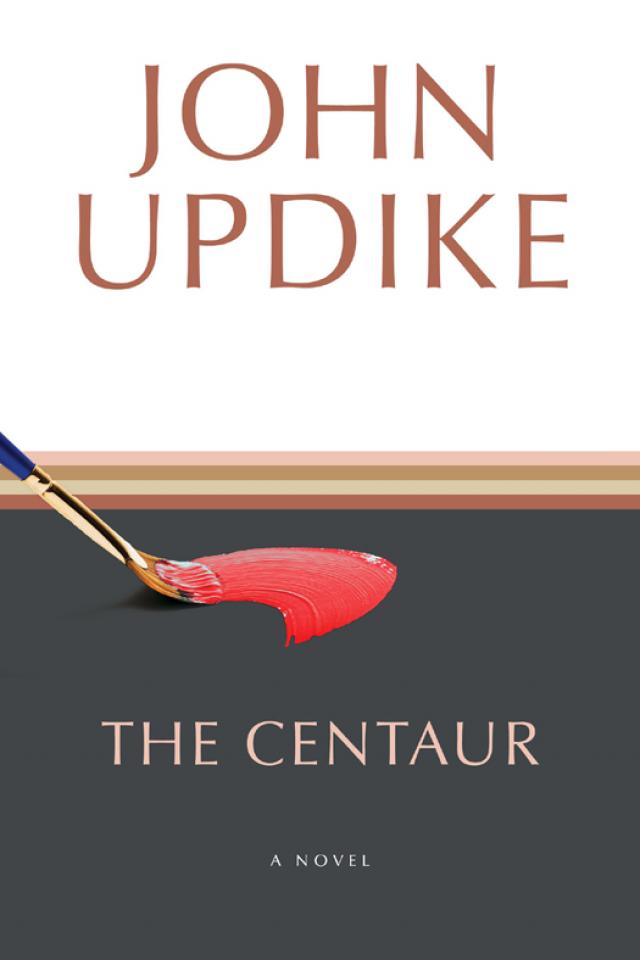
The Centaur: A Novel

The Centaur: A Novel

John Updike

Fiction

WINNER OF THE NATIONAL BOOK AWARD AND THE PRIX DU MEILLEUR LIVRE ÉTRANGER   The Centaur is a modern retelling of the legend of Chiron, the noblest and wisest of the centaurs, who, painfully wounded yet unable to die, gave up his immortality on behalf of Prometheus. In the retelling, Olympus becomes small-town Olinger High School; Chiron is George Caldwell, a science teacher there; and Prometheus is Caldwell’s fifteen-year-old son, Peter. Brilliantly conflating the author’s remembered past with tales from Greek mythology, John Updike translates Chiron’s agonized search for relief into the incidents and accidents of three winter days spent in rural Pennsylvania in 1947. The result, said the judges of the National Book Award, is “a courageous and brilliant account of a conflict in gifts between an inarticulate American father and his highly articulate son.”
Read online
  • 193
Couples: A Novel

Couples: A Novel

John Updike

Fiction

One of the signature novels of the American 1960s, Couples is a book that, when it debuted, scandalized the public with prose pictures of the way people live, and that today provides an engrossing epitaph to the short, happy life of the “post-Pill paradise.” It chronicles the interactions of ten young married couples in a seaside New England community who make a cult of sex and of themselves. The group of acquaintances form a magical circle, complete with ritualistic games, religious substitutions, a priest (Freddy Thorne), and a scapegoat (Piet Hanema). As with most American utopias, this one’s existence is brief and unsustainable, but the “imaginative quest” that inspires its creation is eternal. From the Trade Paperback edition.
Read online
  • 164
Bech at Bay

Bech at Bay

John Updike

Fiction

In this, the final volume in John Updike’s mock-heroic trilogy about the Jewish American writer Henry Bech, our hero is older but scarcely wiser. Now in his seventies, he remains competitive, lecherous, and self-absorbed, lost in a brave new literary world where his books are hyped by Swiss-owned conglomerates, showcased in chain stores attached to espresso bars, and returned to warehouses just three weeks later. In five chapters more startling and surreal than any that have come before, Bech presides over the American literary scene, enacts bloody revenge on his critics, and wins the world’s most coveted writing prize. It’s not easy being Henry Bech in the post-Gutenbergian world, but somebody has to do it, and he brings to the task his signature mixture of grit, spit, and ennui.
Read online
  • 161
Roger's Version

Roger's Version

John Updike

Fiction

As Roger Lambert tells it, he, a middle-aged professor of divinity, is buttonholed in his office by Dale Kohler, an earnest young computer scientist who believes that quantifiable evidence of God's existence is irresistibly accumulating. The theological-scientific debate that ensues, and the wicked strategies that Roger employs to disembarrass Dale of his faith, form the substance of this novel - these and the current of erotic attraction that pulls Esther, Roger's much younger wife, away from him and into Dale's bed. The novel, a majestic allegory of faith and reason, ends also as a black comedy of revenge, for this is Roger's version - Roger Chillingworth's side of the triangle described by Hawthorne's Scarlet Letter - made new for a disbelieving age.
Read online
  • 70
S

S

John Updike

Fiction

S. is Sarah Worth – doctor's wife, North Shore matron, loving mother, and now (suddenly!) ardent follower of a Hindu religious leader known as the Arhat. As this brilliant and very funny novel opens, Sarah is fleeing the confinement of her suburban life to become a sannyasin (pilgrim) at her guru's Arizona ashram. In the letters and audiocassettes that Sarah sends to her husband, daughter, mother, brother, best friend – to her psychiatrist and her hairdresser and her dentist – master novelist John Updike gives us a witty comedy of manners, a biting satire of life on a religious commune, and the story – deep and true – of an American woman in search of herself.
Read online
  • 68
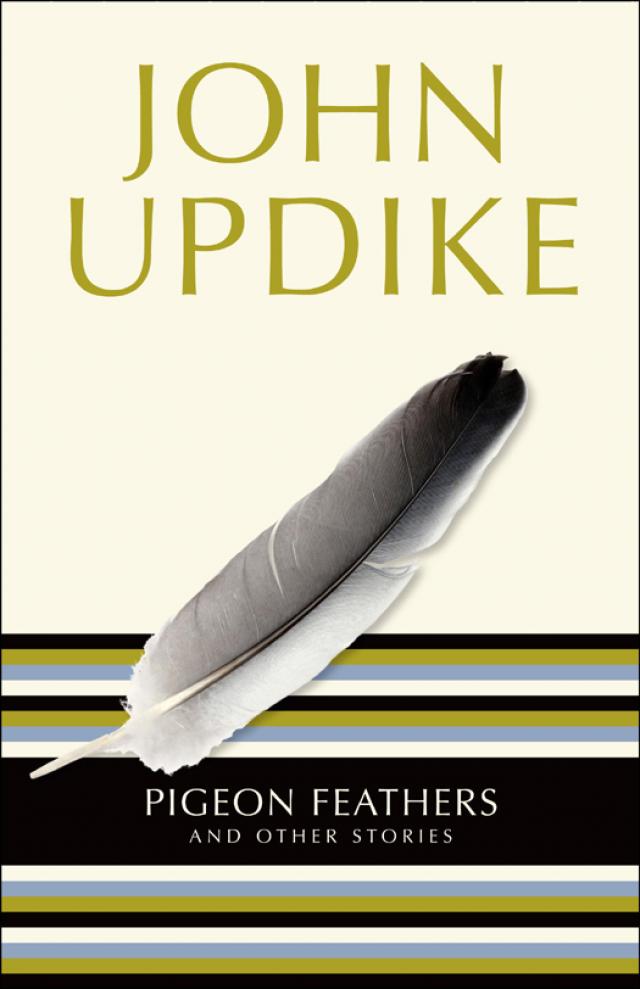
Pigeon Feathers

Pigeon Feathers

John Updike

Fiction

When this classic collection of stories first appeared--in 1962, on the author's thirtieth birthday--Arthur Mizener wrote in The New York Times Book Review: "Updike is a romantic [and] like all American romantics, that is, he has an irresistible impulse to go in memory home again in order to find himself. . . . The precise recollection of his own family-love, parental and marital, is vital to him; it is the matter in which the saving truth is incarnate. . . . Pigeon Feathers is not just a book of very brilliant short stories; it is a demonstration of how the most gifted writer of his generation is coming to maturity; it shows us that Mr. Updike's fine verbal talent is no longer pirouetting, however gracefully, out of a simple delight in motion, but is beginning to serve his deepest insight."
Read online
  • 67
The Centaur

The Centaur

John Updike

Fiction

WINNER OF THE NATIONAL BOOK AWARD AND THE PRIX DU MEILLEUR LIVRE ÉTRANGER The Centaur is a modern retelling of the legend of Chiron, the noblest and wisest of the centaurs, who, painfully wounded yet unable to die, gave up his immortality on behalf of Prometheus. In the retelling, Olympus becomes small-town Olinger High School; Chiron is George Caldwell, a science teacher there; and Prometheus is Caldwell's fifteen-year-old son, Peter. Brilliantly conflating the author's remembered past with tales from Greek mythology, John Updike translates Chiron's agonized search for relief into the incidents and accidents of three winter days spent in rural Pennsylvania in 1947. The result, said the judges of the National Book Award, is "a courageous and brilliant account of a conflict in gifts between an inarticulate American father and his highly articulate son."
Read online
  • 60
Picked-Up Pieces

Picked-Up Pieces

John Updike

Fiction

In John Updike's second collection of assorted prose he comes into his own as a book reviewer; most of the pieces picked up here were first published in The New Yorker in the 1960s and early '70s. If one word could sum up the young critic's approach to books and their authors it would be "generosity": "Better to praise and share," he says in his Foreword, "than to blame and ban." And so he follows his enthusiasms, which prove both deserving and infectious: Kierkegaard, Proust, Joyce, Dostoevsky, and Hamsun among the classics; Borges, Nabokov, Grass, Bellow, Cheever, and Jong among the contemporaries. Here too are meditations on Satan and cemeteries, travel essays on London and Anguilla, three very early "golf dreams," and one big interview. Picked-Up Pieces is a glittering treasury for every reader who likes life, books, wit--and John Updike.
Read online
  • 57
183