Rabbit Is Rich

Rabbit Is Rich

John Updike

Fiction

Winner of the 1982 Pulitzer Prize for Fiction. Ten years after RABBIT REDUX, Harry Angstrom has come to enjoy prosperity as the Chief Sales Representative of Springer Motors. The rest of the world may be falling to pieces, but Harrry's doing all right. That is, until his son returns from the West, and the image of an old love pays a visit to his lot....
Read online
  • 3 916
Rabbit at Rest

Rabbit at Rest

John Updike

Fiction

In John Updike’s fourth and final novel about ex-basketball player Harry “Rabbit” Angstrom, the hero has acquired heart trouble, a Florida condo, and a second grandchild. His son, Nelson, is behaving erratically; his daughter-in-law, Pru, is sending out mixed signals; and his wife, Janice, decides in midlife to become a working girl. As, through the winter, spring, and summer of 1989, Reagan’s debt-ridden, AIDS-plagued America yields to that of George Bush, Rabbit explores the bleak terrain of late middle age, looking for reasons to live. The geographical locale is divided between Brewer, in southwestern Pennsylvania, and Deleon, in southwestern Florida.
Read online
  • 3 357
Roger's Version: A Novel

Roger's Version: A Novel

John Updike

Fiction

As Roger Lambert tells it, he, a middle-aged professor of divinity, is buttonholed in his office by Dale Kohler, an earnest young computer scientist who believes that quantifiable evidence of God’s existence is irresistibly accumulating. The theological-scientific debate that ensues, and the wicked strategies that Roger employs to disembarrass Dale of his faith, form the substance of this novel—these and the current of erotic attraction that pulls Esther, Roger’s much younger wife, away from him and into Dale’s bed. The novel, a majestic allegory of faith and reason, ends also as a black comedy of revenge, for this is Roger’s version—Roger Chillingworth’s side of the triangle described by Hawthorne’s Scarlet Letter—made new for a disbelieving age.
Read online
  • 1 179
Pigeon Feathers: And Other Stories

Pigeon Feathers: And Other Stories

John Updike

Fiction

When this classic collection of stories first appeared—in 1962, on the author’s thirtieth birthday—Arthur Mizener wrote in The New York Times Book Review: “Updike is a romantic [and] like all American romantics, that is, he has an irresistible impulse to go in memory home again in order to find himself. . . . The precise recollection of his own family-love, parental and marital, is vital to him; it is the matter in which the saving truth is incarnate. . . . Pigeon Feathers is not just a book of very brilliant short stories; it is a demonstration of how the most gifted writer of his generation is coming to maturity; it shows us that Mr. Updike’s fine verbal talent is no longer pirouetting, however gracefully, out of a simple delight in motion, but is beginning to serve his deepest insight.”
Read online
  • 1 148
Bech: A Book

Bech: A Book

John Updike

Fiction

The Jewish American novelist Henry Bech—procrastinating, libidinous, and tart-tongued, his reputation growing while his powers decline—made his first appearance in 1965, in John Updike’s “The Bulgarian Poetess.” That story won the O. Henry First Prize, and it and the six Bech adventures that followed make up this collection. “Bech is the writer in me,” Updike once said, “creaking but lusty, battered but undiscourageable, fed on the blood of ink and the bread of white paper.” As he trots the globe, promotes himself, and lurches from one woman’s bed to another’s, Bech views life with a blend of wonder and cynicism that will make followers of the lit-biz smile with delight and wince in recognition. From the Trade Paperback edition.
Read online
  • 965
The Carpentered Hen

The Carpentered Hen

John Updike

Fiction

As a present to John Updike on his fiftieth birthday, and as a treat for his readers, his first book, a collection of light verse originally published twenty-five years ago, is brought back into print, with an author’s foreword and some small revisions.                 Many of these poems were written when the author was a young art student in England and a “Talk of the Town” reporter for The New Yorker, which published over forty of them.  They deal with the quiddities of things, the oddities of science, quirks of American life (especially as reported in Life magazine during those smiling Eisenhower years), and moments of epiphany in literature and nature.  A number—“Ex-Basketball Player,” “Superman,” “Mirror,” “Quilt”—have been frequently reprinted in anthologies.  All show a sharp ear, a fond eye, and an active though not always light-hearted fancy.  Written mainly to amuse, Updike’s early verse was also, as his foreword states, “a way of dealing with the universe, an exercise of the Word.”  Admirers who know him mostly through his fiction should be delighted to encounter what he calls “these old evidences of my own high spirits.”  The Carpentered Hen, in recent years a hard-to-get collector’s item, now again. unhinges her wings, abandons her nest of splinter, and sings.
Read online
  • 934
Picked-Up Pieces: Essays

Picked-Up Pieces: Essays

John Updike

Fiction

In John Updike’s second collection of assorted prose he comes into his own as a book reviewer; most of the pieces picked up here were first published in The New Yorker in the 1960s and early ’70s. If one word could sum up the young critic’s approach to books and their authors it would be “generosity”: “Better to praise and share,” he says in his Foreword, “than to blame and ban.” And so he follows his enthusiasms, which prove both deserving and infectious: Kierkegaard, Proust, Joyce, Dostoevsky, and Hamsun among the classics; Borges, Nabokov, Grass, Bellow, Cheever, and Jong among the contemporaries. Here too are meditations on Satan and cemeteries, travel essays on London and Anguilla, three very early “golf dreams,” and one big interview. Picked-Up Pieces is a glittering treasury for every reader who likes life, books, wit—and John Updike.
Read online
  • 890
Seek My Face

Seek My Face

John Updike

Fiction

John Updike’s twentieth novel, like his first, The Poorhouse Fair, takes place in one day, a day that contains much conversation and some rain. The seventy-nine-year-old painter Hope Chafetz, who in the course of her eventful life has been Hope Ouderkirk, Hope McCoy, and Hope Holloway, answers questions put to her by a New York interviewer named Kathryn, and recapitulates, through stories from her career and many marriages, the triumphant, poignant saga of postwar American art. In the evolving relation between the two women, interviewer and subject move in and out of the roles of daughter and mother, therapist and patient, predator and prey, supplicant and idol. The scene is central Vermont; the time, the early spring of 2001.
Read online
  • 802
The Afterlife: And Other Stories

The Afterlife: And Other Stories

John Updike

Fiction

To the hero of the title story of this collection, all of England has the glow of an afterlife: “A miraculous lacquer lay upon everything, beading each roadside twig . . . each reed of thatch, each tiny daisy trembling in the grass.” All of these stories, each in its own way, partake of this glow, as life beyond middle age is explored and found to have its own exquisite dearness. As death approaches, existence takes on, for some of Updike’s aging characters, a translucence, a magical fragility; vivid memory and casual misperception lend the mundane an antic texture, and the backward view, lengthening, acquires a certain grandeur. Here is a world where wonder stubbornly persists, and fresh beginnings almost outnumber losses.
Read online
  • 787
Gertrude and Claudius

Gertrude and Claudius

John Updike

Fiction

Gertrude and Claudius are the “villains” of Hamlet: he the killer of Hamlet’s father and usurper of the Danish throne, she his lusty consort, who marries Claudius before her late husband’s body is cold. But in this imaginative “prequel” to the play, John Updike makes a case for the royal couple that Shakespeare only hinted at. Gertrude and Claudius are seen afresh against a background of fond intentions and family dysfunction, on a stage darkened by the ominous shadow of a sullen, erratic, disaffected prince. “I hoped to keep the texture light,” Updike said of this novel, “to move from the mists of Scandinavian legend into the daylight atmosphere of the Globe. I sought to narrate the romance that preceded the tragedy.”
Read online
  • 776
Bech Is Back

Bech Is Back

John Updike

Fiction

In this follow-up to Bech: A Book, Henry Bech, the priapic, peripatetic, and unproductive Jewish American novelist, returns with seven more chapters from his mock-heroic life. He turns fifty in a confusing blend of civic and erotic circumstances while publicizing himself in Australia and Canada. He marries a shiksa and travels with her to Israel, where she falls in love with the land, and to Scotland, where he does. And—sweating buckets! thinking big! minting miracles!—he writes an ingeniously tawdry bestseller. Bech’s aesthetic and moral embarrassments reveal acid truths about both his trade and our times. From the Trade Paperback edition.
Read online
  • 752
Marry Me: A Romance

Marry Me: A Romance

John Updike

Fiction

A deftly satirical portrait of life and love in a suburban town as only Updike can paint it. Updike's eighth novel, subtitled "A Romance" because, he says, "People don't act like that any more," centers on the love affair of a married couple in the Connecticut of 1962. Unfortunately, this is a couple whose members are married to other people. Suburban infidelity is familiar territory by now, but nobody knows it as well as Updike, and the book is written with the author's characteristic poetic sensibility and sly wit.
Read online
  • 747
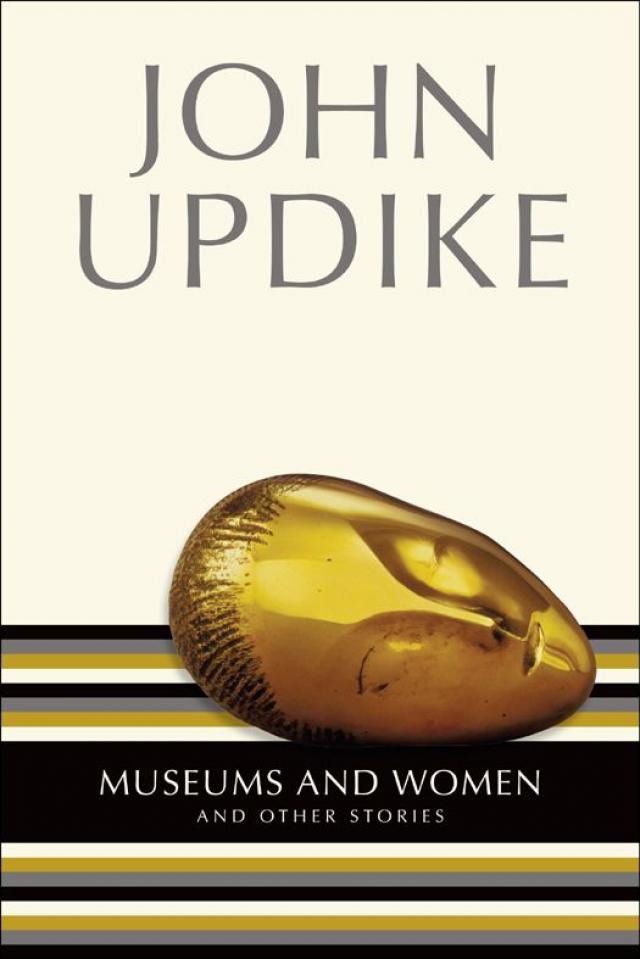
Museums and Women: And Other Stories

Museums and Women: And Other Stories

John Updike

Fiction

Museums and Women gathers twenty-nine short stories from the 1960s and early 1970s. It is John Updike’s most various collection, a book as full of departures and surprises as the historical period that produced them. Some stories, such as the title piece, have the tone and personality of essays. Others objectify the chimeras of middle-class life, especially life in a fictional New England enclave called Tarbox. The illustrated jeux d’esprit in the section called “Other Modes” place Updike somewhere between Robert Benchley and Donald Barthelme as a toymaker in prose. Crowning the collection are five scenes from the marriage of Richard and Joan Maple, a story sequence with the narrative interest and cumulative power of a novel.
Read online
  • 708
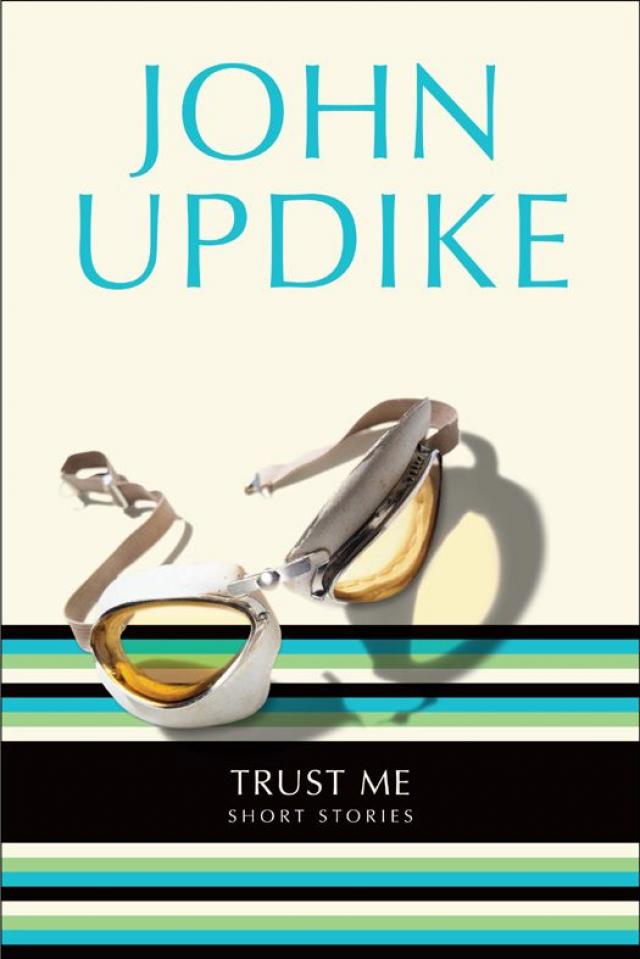
Trust Me: Short Stories

Trust Me: Short Stories

John Updike

Fiction

The theme of trust, betrayed or fulfilled, runs through this collection of short stories: Parents lead children into peril, husbands abandon wives, wives manipulate husbands, and time undermines all. Love pangs, a favorite subject of the author, take on a new urgency as earthquakes, illnesses, lost wallets, and deaths of distant friends besiege his aging heroes and heroines. One man loves his wife’s twin, and several men love the imagined bliss of their pasts; one woman takes an impotent lover, and another must administer her father’s death. Bourgeois comforts and youthful convictions are tenderly seen as certain to erode: “Man,” as one of these stories concludes, “was not meant to abide in paradise.”
Read online
  • 699
183