Burmese Days

Burmese Days

George Orwell

Fiction / Politics / Journalism

Set in the days of the Empire, with the British ruling in Burma, Burmese Days describes both indigenous corruption and Imperial bigotry, when 'after all, natives were natives - interesting, no doubt, but finally only a 'subject' people, an inferior people with black faces'. Against the prevailing orthodoxy, Flory, a white timber merchant, befriends Dr Veraswami, a black enthusiast for Empire. The doctor needs help. U Po Kyin, Sub- divisional Magistrate of Kyauktada, is plotting his downfall. The only thing that can save him is European patronage: membership of the hitherto all-white Club. While Flory prevaricates, beautiful Elizabeth Lackersteen arrives in Upper Burma from Paris. At last, after years of 'solitary hell', romance and marriage appear to offer Flory an escape from the 'lie' of the 'pukka sahib pose'.
Read online
  • 539
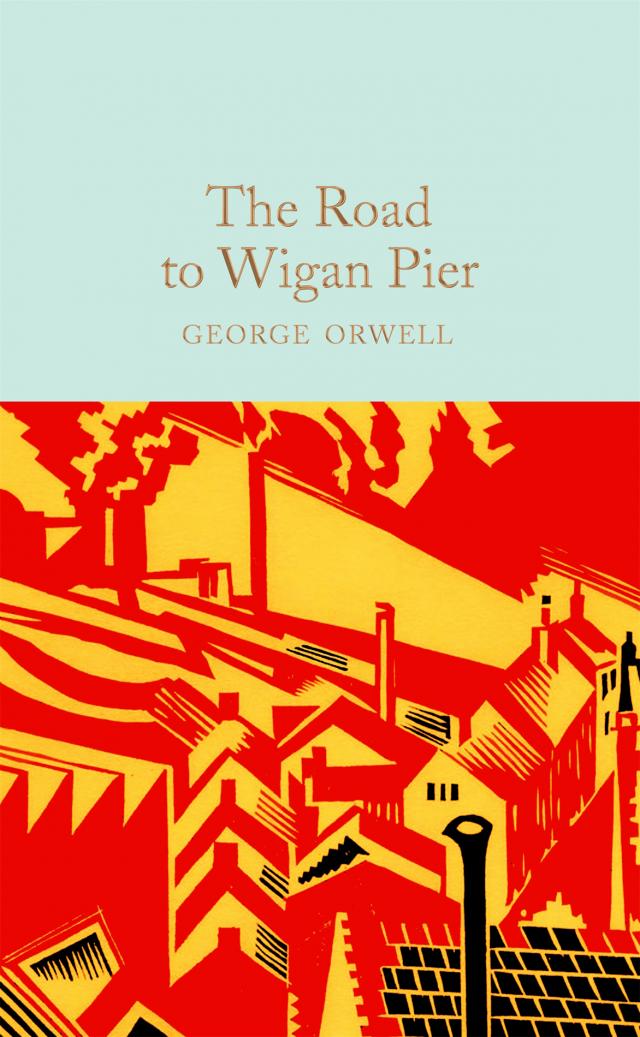
The Road to Wigan Pier

The Road to Wigan Pier

George Orwell

Fiction / Politics / Journalism

The Road to Wigan Pier is a book in two parts: the first half is Orwell's description of working-class life in industrial communities of the north of England, the second examines his own political views.Part of the Macmillan Collector's Library; a series of stunning, clothbound, pocket-sized classics with gold foiled edges and ribbon markers. These beautiful books make perfect gifts or a treat for any book lover. This edition is introduced by Amelia Gentleman.The Road to Wigan Pier is an insightful and powerful account of lives lived in poverty and deprivation in a time of low wages and meagre government support. Orwell describes dismal housing (including the lodging house where he stays), harsh working conditions and the devastating effects of unemployment. And he also vividly describes the courage and dignity of the people he meets. In the second half of the book, Orwell examines his own political and social affiliations with an impressive ability to...
Read online
  • 492
A Clergyman's Daughter

A Clergyman's Daughter

George Orwell

Fiction / Politics / Journalism

Intimidated by her father, the rector of Knype Hill, Dorothy performs her submissive roles of dutiful daughter and bullied housekeeper. Her thoughts are taken up with the costumes she is making for the church school play, by the hopelessness of preaching to the poor and by debts she cannot pay in 1930s Depression England. Suddenly her routine shatters and Dorothy finds herself down and out in London. She is wearing silk stockings, has money in her pocket and cannot remember her name. Orwell leads us through a landscape of unemployment, poverty and hunger, where Dorothy's faith is challenged by a social reality that changes her life.
Read online
  • 450
Fifty Orwell Essays

Fifty Orwell Essays

George Orwell

Fiction / Politics / Journalism

This collection of fifty essays spans the 1930s and 1940s and covers the broad range of Orwell's interests: political, social and literary. As well as extracts from well-known books such as 'Down and out in Paris and London' and 'The Road to Wigan Pier', this volume includes classic articles such as 'Killing an Elephant' and 'Good Bad Books, ' as well as lesser known pieces. Whether or not readers are familiar with his work or sympathatic to his views, they are sure to be seduced by Orwell's logical mind and lucid prose in this handsome new edition of his wide-ranging and stimulating essays. Contents: The Spike; A Hanging (1931); Bookshop Memories (1936); Shooting an Elephant (1936); Down the Mine (1937) (from "The Road to Wigan Pier"); North and South (from "The Road to Wigan Pier") (1937); Spilling the Spanish Beans (1937); Marrakech (1939); Boys' Weeklies and Frank Richards's Reply (1940); Charles Dickens (1940); Charles Reade (1940); Inside The Whale (1940); The Art of Donald Mcgill (1941); The Lion and the Unicorn: Socialism and the English Genius (1941); Wells, Hitler And The World State (1941); Looking Back On The Spanish War (1942); Rudyard Kipling (1942); Mark Twain - the Licensed Jester (1943); Poetry and the Microphone (1943); W. B. Yeats (1943); Arthur Koestler (1944); Benefit of Clergy: Some Notes on Salvador Dali (1944); Raffles and Miss Blandish (1944); Antisemitism in Britain (1945); Freedom of the Park (1945); Future of a Ruined Germany (1945); Good Bad Books; In Defence of P. G. Wodehouse (1945); Nonsense Poetry; Notes on Nationalism (1945); Revenge is Sour (1945); The Sporting Spirit; You and the Atomic Bomb (1945); A Good Word for the Vicar of Bray; A Nice Cup of Tea (1946); Books vs. Cigarettes; Confessions of a Book Reviewer; Decline of the English Murder; How the Poor Die; James Burnham and the Managerial Revolution; Pleasure Spots; Politics and the English Language; Politics vs. Literature: an Examination of Gulliver's Travels; Riding Down from Bangor; Some Thoughts on the Common Toad; The Prevention of Literature; Why I Write (1946); Lear, Tolstoy and the Fool; Such, Such Were the Joys (1947); Writers and Leviathan (1948); Reflections on Gandhi.
Read online
  • 449
1984 (Penguin)

1984 (Penguin)

George Orwell

Fiction / Politics / Journalism

'Who controls the past controls the future: who controls the present controls the past' Hidden away in the Record Department of the sprawling Ministry of Truth, Winston Smith skilfully rewrites the past to suit the needs of the Party. Yet he inwardly rebels against the totalitarian world he lives in, which demands absolute obedience and controls him through the all-seeing telescreens and the watchful eye of Big Brother, symbolic head of the Party. In his longing for truth and liberty, Smith begins a secret love affair with a fellow-worker Julia, but soon discovers the true price of freedom is betrayal. George Orwell's dystopian masterpiece, Nineteen Eighty-Four is perhaps the most pervasively influential book of the twentieth century. **
Read online
  • 431
A Collection of Essays

A Collection of Essays

George Orwell

Fiction / Politics / Journalism

**George Orwell's collected nonfiction, written in the clear-eyed and uncompromising style that earned him a critical following ** One of the most thought-provoking and vivid essayists of the twentieth century, George Orwell fought the injustices of his time with singular vigor through pen and paper. In this selection of essays, he ranges from reflections on his boyhood schooling and the profession of writing to his views on the Spanish Civil War and British imperialism. The pieces collected here include the relatively unfamiliar and the more celebrated, making it an ideal compilation for both new and dedicated readers of Orwell's work.
Read online
  • 309
Facing Unpleasant Facts

Facing Unpleasant Facts

George Orwell

Fiction / Politics / Journalism

George Orwell was first and foremost an essayist, producing throughout his life an extraordinary array of short nonfiction that reflected—and illuminated—the fraught times in which he lived. "As soon as he began to write something," comments George Packer in his foreword, "it was as natural for Orwell to propose, generalize, qualify, argue, judge—in short, to think—as it was for Yeats to versify or Dickens to invent."Facing Unpleasant Facts charts Orwell's development as a master of the narrative-essay form and unites such classics as "Shooting an Elephant" with lesser-known journalism and passages from his wartime diary. Whether detailing the horrors of Orwell's boyhood in an English boarding school or bringing to life the sights, sounds, and smells of the Spanish Civil War, these essays weave together the personal and the political in an unmistakable style that is at once plainspoken and brilliantly complex.
Read online
  • 60
All Art Is Propaganda

All Art Is Propaganda

George Orwell

Fiction / Politics / Journalism

As a critic, George Orwell cast a wide net. Equally at home discussing Charles Dickens and Charlie Chaplin, he moved back and forth across the porous borders between essay and journalism, high art and low. A frequent commentator on literature, language, film, and drama throughout his career, Orwell turned increasingly to the critical essay in the 1940s, when his most important experiences were behind him and some of his most incisive writing lay ahead.All Art Is Propaganda follows Orwell as he demonstrates in piece after piece how intent analysis of a work or body of work gives rise to trenchant aesthetic and philosophical commentary. With masterpieces such as "Politics and the English Language" and "Rudyard Kipling" and gems such as "Good Bad Books," here is an unrivaled education in, as George Packer puts it, "how to be interesting, line after line."
Read online
  • 55
Why Socialists Don’t Believe in Fun

Why Socialists Don’t Believe in Fun

George Orwell

Fiction / Politics / Journalism

George Orwell’s payment book for 20 December 1943 records the sum of pounds 5.5.0 for a special article of 2,000 words for Tribune. This has never been traced in Tribune under Orwell’s name but it now seems certain that an essay, entitled “Can Socialists Be Happy?” by “John Freeman” is what is referred to. The name Freeman would have appealed to Orwell as a pseudonym, and the article has many social, political and literary links with Orwell, such as the relation of Lenin to Dickens (the fact that Lenin read A Christmas Carol on his deathbed also appears in the second paragraph of Orwell’s 1939 essay, “Charles Dickens”). A “real” John Freeman, later editor of the New Statesman, has confirmed that he did not write the article. The reason why Orwell chose to write as “John Freeman” he never used this pseudonym again is not clear. It may be that Tribune did not want its literary editor to be seen to be associated with its political pages. Possibly it was a device that allowed Orwell to be paid a special fee. Or it may be that he simply wished to see how far Tribune would let him go with his opinions. In any case, the article appeared in the Christmas issue and provoked much debate in the issues that followed. The “lost essay” is included in the Collected Works and printed here for the first time under Orwell’s name.
Read online
  • 46
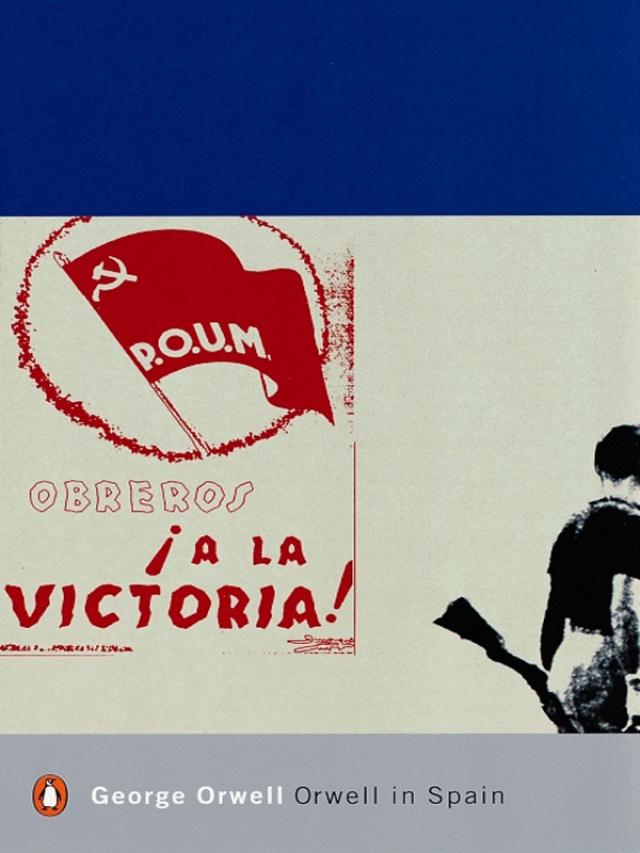
Orwell in Spain

Orwell in Spain

George Orwell

Fiction / Politics / Journalism

The volume collects together, for the first time ever, Orwell's writings on his experience of the Spanish Civil War - the chaos at the Front, the futile young deaths for what became a confused cause, the antique weapons and the disappointment many British Socialists felt on arriving in Spain to help. ORWELL IN SPAIN includes the complete text of HOMAGE TO CATALONIA.
Read online
  • 31
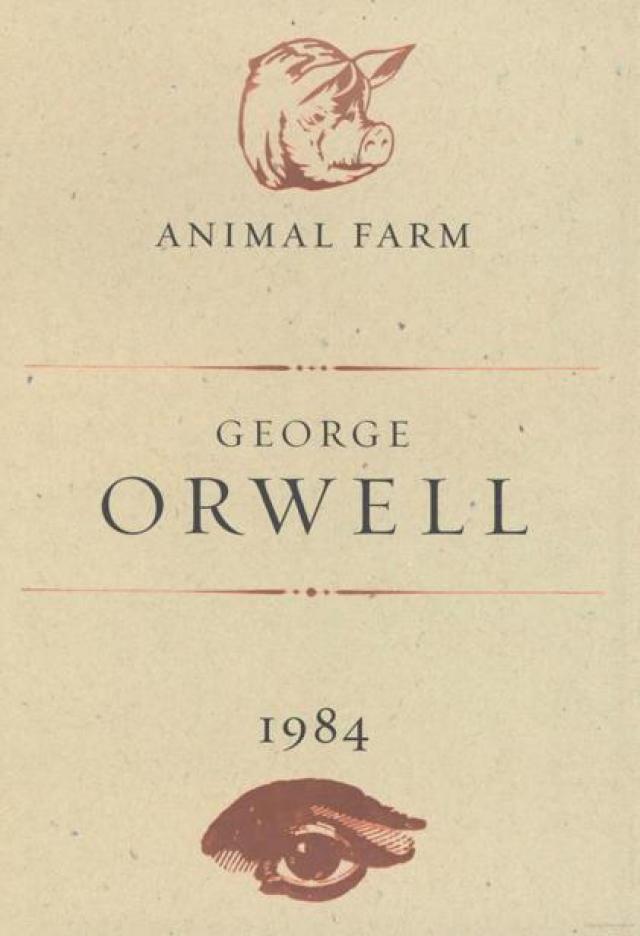
Animal Farm and 1984

Animal Farm and 1984

George Orwell

Fiction / Politics / Journalism

ANIMAL FARMGeorge Orwell's classic satire of the Russian Revolution is an intimate part of our contemporary culture. It is the account of the bold struggle, initiated by the animals, that transforms Mr. Jones's Manor Farm into Animal Farm—a wholly democratic society built on the credo that All Animals Are Created Equal. Out of their cleverness, the pigs Napoleon, Squealer, and Snowball emerge as leaders of the new community in a subtle evolution that proves disastrous. The climax is the brutal betrayal of the faithful horse Boxer, when totalitarian rule is reestablished with the bloodstained postscript to the founding slogan: But some Animals Are More Equal Than Others. . . .1984In 1984, London is a grim city where Big Brother is always watching you and the Thought Police can practically read your mind. Winston is a man in grave danger for the simple reason that his memory still functions. Drawn into a forbidden love affair, Winston finds the courage to join a...
Read online
  • 11
183