In the Deadlands

In the Deadlands

David Gerrold

David Gerrold

David Gerrold burst onto the science fiction scene in the late sixties with more Hugo and Nebula nominations than any other writer had ever received at the beginning of his career.His first collection of stories, With a Finger in My I, showcased his remarkable range. The jewel in that collection was “In the Deadlands," a bizarre and disturbing journey into a landscape of madness—not so much a story as a sculpture made of words. Nominated for the Nebula award for best novelette of the year, “In the Deadlands" has been out of print for 40 years.This new collection contains all the stories from With a Finger in My I, plus four other works written in the same period, with revealing notes from the author.
Read online
  • 40
Child of Earth

Child of Earth

David Gerrold

David Gerrold

Book one of the Sea of Grass trilogyWant to visit another world? It might not be as easy as you think.When Kaer's extended family signs up to emigrate to Linnea, a planet known for horses as large as houses and dangerously mistrustful natives, Kaer is certain the move will bring the divided household closer together. What none of them are prepared for is the grueling emigration training in the Linnean dome, a makeshift environment designed to be like Linnea in every possible way, from the long, brutally harsh winters to the deadly kacks—wolf-like creatures as tall as men. The training is tough, but Kaer's family is up to the challenge. Soon they begin working like Linneans, thinking like Linneans, even accepting Linnean gods as their own. The family's emigration seems to be just around the corner.But then, a disaster on Linnea itself changes everything.
Read online
  • 37
Under the Eye of God

Under the Eye of God

David Gerrold

David Gerrold

Once they had been humanity's last best hope; a race of genetically engineered killing machines known as the Phaestor and their army of deadly Moktar Dragons. Now, the enemy long vanquished, the Phaestor themselves have become the enemy, seizing control of the galaxy and subjugating all lesser species - including humans - to feed their appetite for terror and blood. On a small, insignifigant planet called Thoska-Roole, a ragtag alliance of humans, androids, and bioforms make a last desperate stand against Phaestor domination. Among their number are two bounty hunters, a mercenary starship captain, and a disgraced reptilian warrior. As the Phaestor begin a new reign of unprecedented terror, these rebels prepare to strike back against their vampire overlords and bring revolution to the stars.
Read online
  • 35
Blood and Fire

Blood and Fire

David Gerrold

David Gerrold

With an introduction by D. C. FontanaThe Morthans were physically and mentally superior. Descended from humans, they were now, literally, "more-than" human...and considered the human race to be little better than animals. They would stop at nothing to conquer the remaining human-controlled worlds.Formerly a never-filmed script for Star Trek: The Next Generation, this conclusion to the Star Wolf trilogy finds Executive Officer Korie and the crew of the Star Wolf answering a distress call from a mysteriously lifeless ship. On board the Norway, they discover half-wave, half-particle clusters of golden light—and a dead man. The lights are the energy form of bloodworms, a fatal infestation that feeds off the energy of living bodies, which scientists on the Norway have developed for use in the Alliance's war against the Morthans. Officer Korie's struggle between his conscience and his desire for vengeance will determine not only the safety of...
Read online
  • 32
Bouncing Off the Moon

Bouncing Off the Moon

David Gerrold

David Gerrold

From Publishers WeeklyNebula Award winner Gerrold doesn't disappoint in this follow-up to 2000's Jumping Off the Planet. Charles "Chigger" Dingillian and his brothers believe they can get along well enough without their recently divorced parents, if they just stick together. They move off Earth and discover that a robot monkey given to the youngest of them possesses a computer far more advanced than might be required of a toy. In fact the computer is of a power that could make trillions of dollars for the owner. The youth of the protagonists automatically reminds one of Heinlein's juveniles. Though it is doubtful that the convoluted science here could be followed by Heinlein's targeted 12- to 14-year-olds, it really doesn't matter, because the real story is that of being thrust into a world that is adult indeed. After Chigger and his brothers leave Earth just in time to escape a plague that results in social and economic collapse, new friends lead them aboard an automated cargo pod bound for the moon. The moon is an unforgiving and potentially deadly environment, but the brothers soon wonder whether several mishaps are just that or deliberate attempts at murder. As the story continues, the line that divides friend from foe becomes more and more indistinct in this engaging, believable and eventually riveting book from the author revered for his immensely popular Star Trek teleplay, "The Trouble with Tribbles." (Apr. 12) Copyright 2001 Reed Business Information, Inc. FromAs the even more Heinlein-indebted sequel to Jumping off the Planet (2000) develops, the three young Dingillian brothers, aided by loquacious money launderer Alexei Krislov, must sneak off Geosynchronous Station to the moon. There they take a long hike across the rugged surface, which abounds with technological and natural wonders, and meet more perils than Pauline ever faced, as well as suspected human treachery on all sides. They barely run that gauntlet, only to fall into the hands of the legal authorities, who, acting on behalf of would-be claimants, seek the youngest brother's robot monkey for what it contains--one of the most advanced artificial intelligences in existence. Thanks to a libertarian judge and the AI, acting as machina ex deo, so to speak, the ending is extravagantly happy. Charlie Dingillian, the narrator, remains a convincing, complex 13-year-old, and his portrayal of his family's dysfunctioning still rings true, though the sequel lacks the exuberant creativity and tight narrative of its predecessor. Roland GreenCopyright © American Library Association. All rights reserved
Read online
  • 27
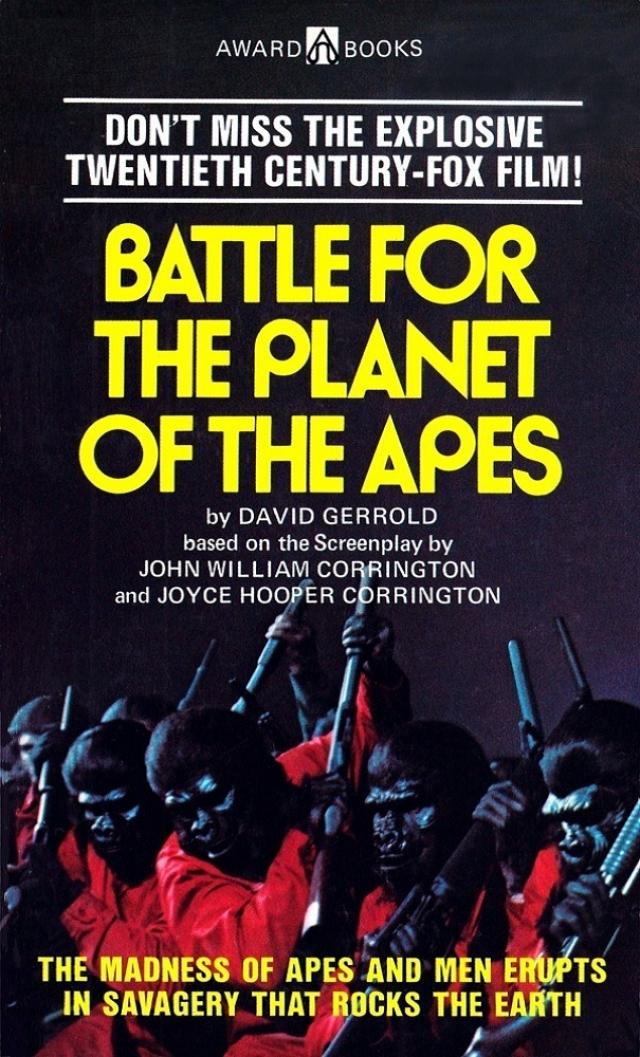
Battle For The Planet Of The Apes

Battle For The Planet Of The Apes

David Gerrold

David Gerrold

BATTLE FOR THE PLANET OF THE APES THE CITY OF THE APES It was a quiet, peaceful city. It was a city ruled by apes and served by men. It was a city unaware of an angry band of vicious gorillas anxious to revolt and an insane cadre of mutated humans hungry to kill. It was a city on the brink of an horrendous destruction that had happened once—and was suddenly, inexorably, happening again . . .
Read online
  • 24
Deathbeast

Deathbeast

David Gerrold

David Gerrold

There were eight of them - six hunters and two official guides. Thir destination was Earth as it was a hundred million years ago, long before human dominion, when the great hot-blooded dinosaurs ruled supreme.
Read online
  • 23
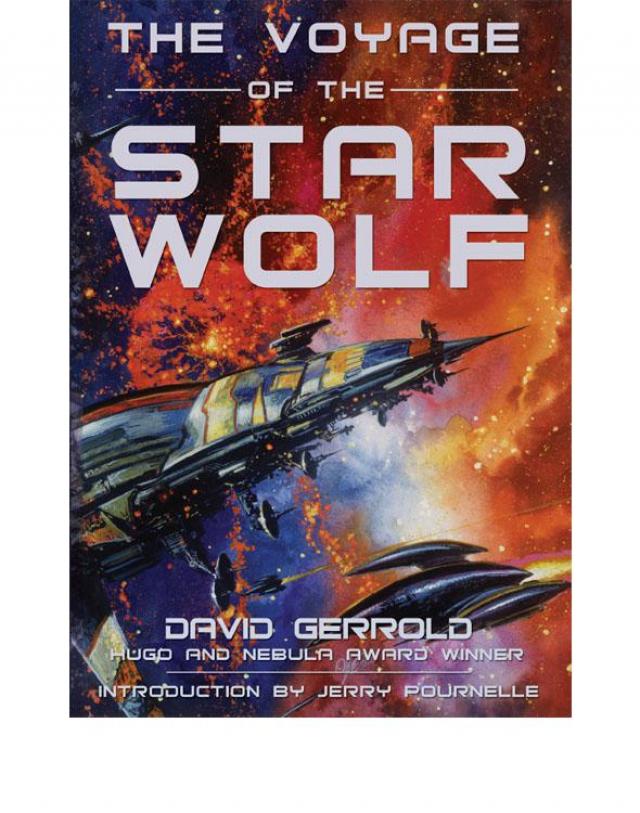
The Voyage of the Star Wolf

The Voyage of the Star Wolf

David Gerrold

David Gerrold

The first work in David Gerrold's Star Wolf trilogy, this tale pits the human members of the Star Wolf space vessel against the superhuman Morthan crew. Captain Jonathan Korie, hampered by the loss of most of the human fleet to the Morthans and a nearly disabled ship of his own, faces the Morthan threat driven by the need for survival and the desire for revenge. A classic of military science fiction, the Star Wolf trilogy combines rapid action with powerful studies of military character.
Read online
  • 22
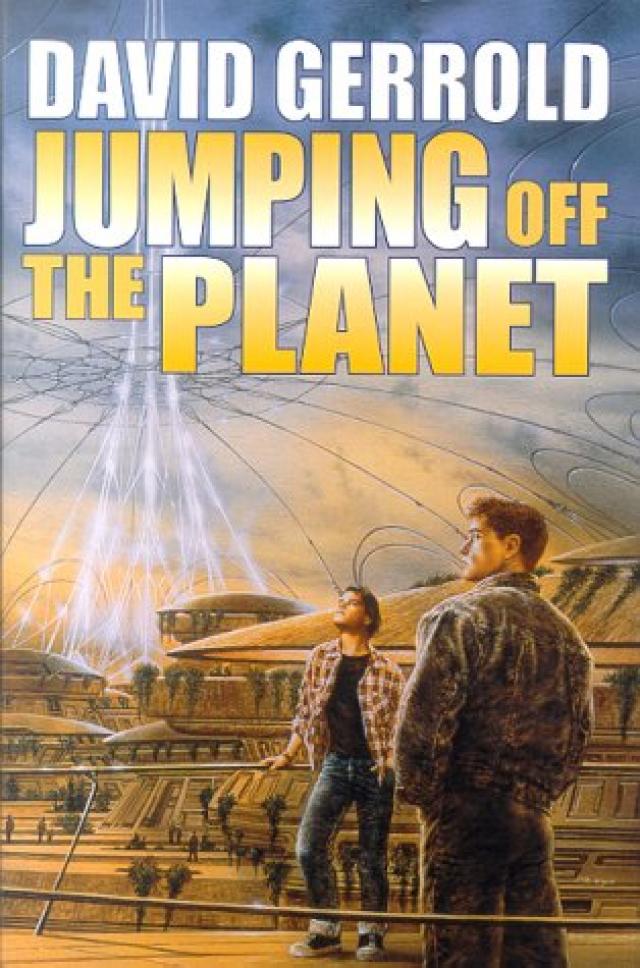
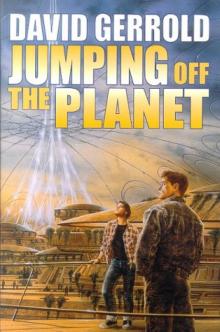
Jumping Off the Planet

Jumping Off the Planet

David Gerrold

David Gerrold

From Publishers WeeklyNebula- and Hugo-winner Gerrold, who scripted the classic Star Trek episode "The Trouble with Tribbles," gives an engaging new twist to the "growing up novel"--growing right off the planet Earth. Costarring with Gerrold's precocious 13-year-old hero, Charles "Chigger" Dingillian, is the Beanstalk, a dizzying orbital elevator system running on magnetic induction that lifts humanity from the exhausted Earth it is devouring to the Moon, the planets and, eventually, the stars. In this first volume of the projected Starsiders Trilogy, Chigger, the always overlooked middle sibling and neither child nor adult, is the human battleground for his divorced parents: a wimpy musician father who kidnaps his boys to give them a chance at a better life off Earth and a newly lesbian mother who venomously chases them into space. Chigger bridges the gap separating his older brother, Weird, and his younger, Stinky, as they ride the Beanstalk between the festering Earth, teeming with crazies and plagues, and the burgeoning new off-world societies. With the boys caught up in the smuggling and big-business intrigue that simmers in a world where international corporatism has made all borders irrelevant, Gerrold pulls off Chigger's choices with just the right mix of preteen braggadocio and heartbreak. The science here is every bit as convincing as the fiction, adding a satisfying intellectual dimension to the start of a classy take on an old, old tale: an everyboy climbs a beanstalk to discover who he will be as a man. (Mar.) Copyright 2000 Reed Business Information, Inc. FromTwenty-first-century Earth is desperately overcrowded, and Charles Dingillian's father offers his three sons a trip to the moon. Actually, he is kidnapping the boys from their mother--and couriering key data in an illegal financial transaction. He is also a wimp, Charles' mother is bisexual, and Charles' older brother is gay. Oh--and the younger one is an obnoxious brat. Clearly we're not in Heinlein's Kansas. But cut through all the characterization-by-dysfunctionality, and a genuinely powerful coming-of-age story remains, with characters as sympathetic as they are bizarre and a vividly depicted future society. The legal scenes are worthy of Heinlein, and Gerrold's depiction of the giant space elevator, the Beanstalk, vividly fills in its technological details, its appearance, the life aboard it, the society of its permanent residents, and its potential for disaster. The first book of the Starsiders Trilogy suggests that Gerrold is obliquely approaching the territory of Heinlein's juveniles. Like much of Gerrold's work, this is sometimes over-the-top but always recognizably the creation of a major talent. Roland Green
Read online
  • 19
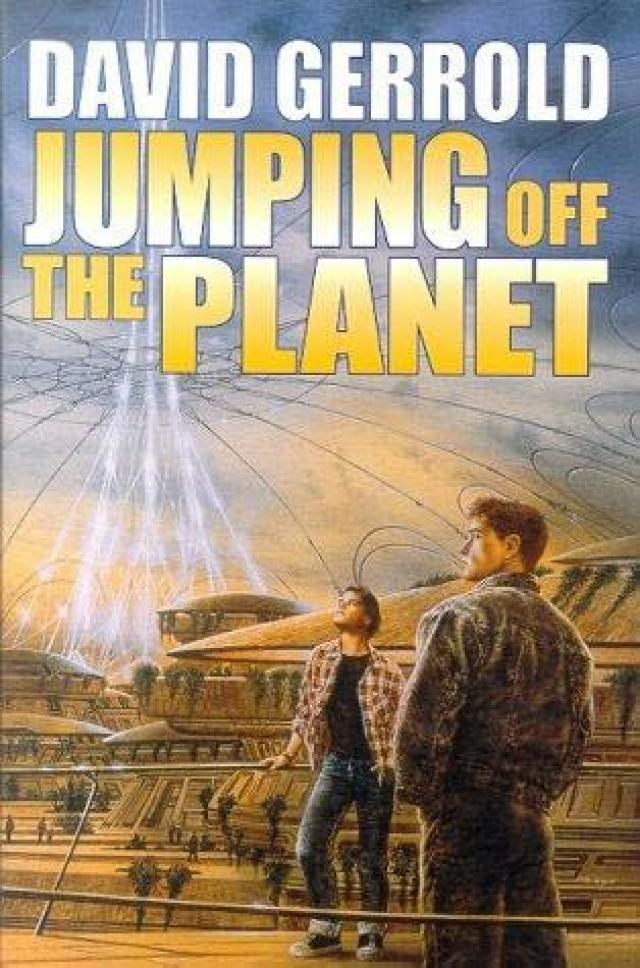
Jumping off the Planet d-1

Jumping off the Planet d-1

David Gerrold

David Gerrold

A disastrous family vacation leads Charles and his two brothers to "divorce" their warring parents. Fleeing to the Orbital Elevator, a super high-tech beanstalk, they must either return home to a devastated Earth, or continue on to a new home somewhere on the Moon--where Charlie is caught between opposing forces in a battle for global domination. First in a new series.
Read online
  • 17
183