Ladders to Fire coti-1

Ladders to Fire coti-1

Anais Nin

Religion / Buddhism / Nonfiction

Ladders to Fire explores the erotic attachments of four young women. Nin described it as a “woman’s struggle to understand her own nature.” It began a five-volume “continuous novel,” Cities of the Interior , which includes Children of the Albatross (1947), The Four-Chambered Heart (1950), A Spy in the House of Love (1954), and Solar Barque (1959). Set in the pre-war, expatriate Paris of Henry Miller, this novel — which shocked Nin’s contemporaries — draws its inspiration from her confessional diaries. Although Nin found in her diaries a profound mode of self-creation and confession, she could not reveal this intimate record of her own experiences during her lifetime. Instead, she turned to fiction, where her stories and novels became artistic “distillations” of her secret diaries.
Read online
  • 27
Diary of Anais Nin, Volume 3

Diary of Anais Nin, Volume 3

Anais Nin

Religion / Buddhism / Nonfiction

Nin's years of struggle and final triumph as an author in America. "Transcending mere self-revelation... the diary examines human personality with a depth and understanding seldom surpassed since Proust...dream and fact are balanced and...in their joining lie the elements of masterpiece" (Washington Post). Edited and with a Preface by Gunther Stuhlmann; Index.
Read online
  • 26
A Spy in the House of Love coti-4

A Spy in the House of Love coti-4

Anais Nin

Religion / Buddhism / Nonfiction

Although Anaïs Nin found in her diaries a profound mode of self-creation and confession, she could not reveal this intimate record of her own experiences during her lifetime. Instead, she turned to fiction, where her stories and novels became artistic “distillations” of her secret diaries. A Spy in the House of Love, whose heroine Sabina is deeply divided between her drive for artistic and sexual expression, on the one hand, and social restrictions and self-created inhibitions, on the other, echoed Nin’s personal struggle with sex, love, and emotional fragmentation. Written when Nin’s own life was taut with conflicting loyalties, her protagonist Sabina repeatedly asks herself, can one indulge in one's sensual restlessness, the fantasies, the relentless need for adventure without devastating consequences?
Read online
  • 25
Diary of Anais Nin, Volume 4

Diary of Anais Nin, Volume 4

Anais Nin

Religion / Buddhism / Nonfiction

The author's experiences in Greenwich Village, where she defends young writers against the Establishment, and her trip across the country in an old Ford to California and Mexico. "[Nin is] one of the most extraordinary and unconventional writers of this century" (New York Times Book Review). Edited and with a Preface by Gunther Stuhlmann; Index.
Read online
  • 14
Children of the Albatross coti-2

Children of the Albatross coti-2

Anais Nin

Religion / Buddhism / Nonfiction

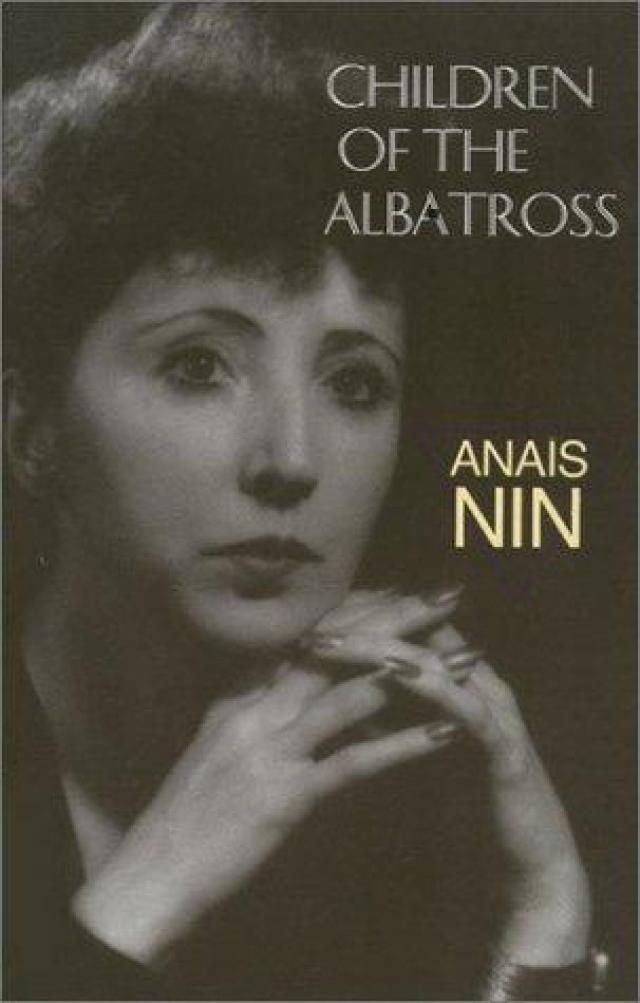
Children of the Albatross is divided into two sections: “The Sealed Room” focuses on the dancer Djuna and a set of characters, chiefly male, who surround her; “The Cage” brings together a case of characters already familiar to Nin’s readers, but it is their meeting place that is the focal point of the story.
Read online
  • 10
Seduction of the Minotaur coti-5

Seduction of the Minotaur coti-5

Anais Nin

Religion / Buddhism / Nonfiction

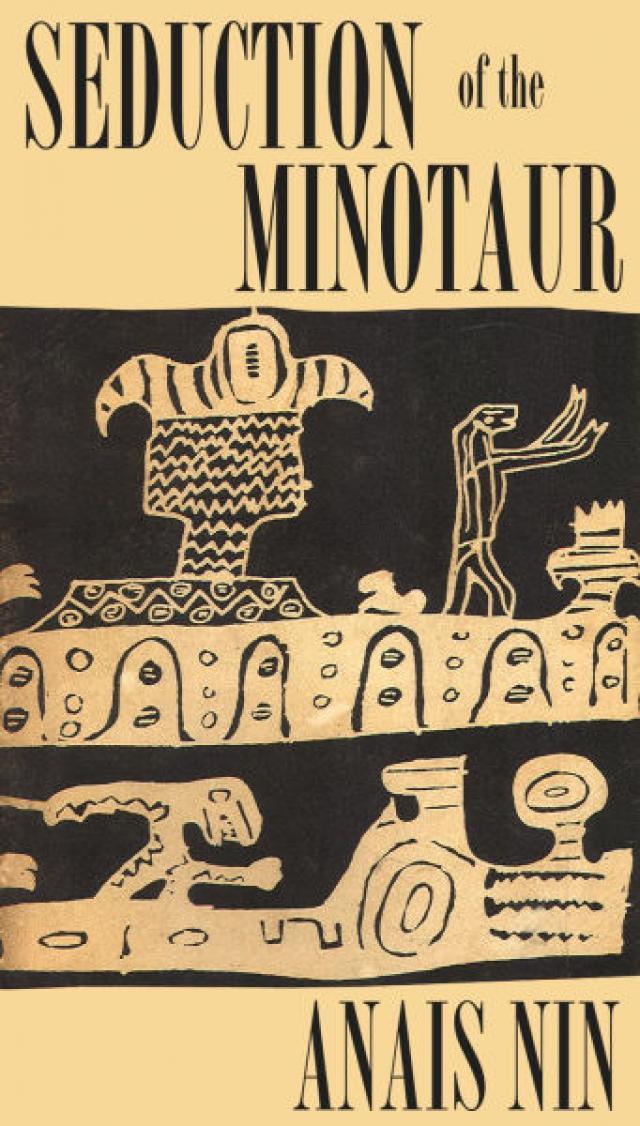
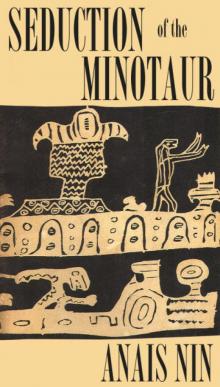
Seduction of the Minotaur is an example of Anaïs Nin’s most mature and cohesive fiction. The central character, Lillian, arrives in an exotically primitive Mexico from New York, in part to forget her crumbling marriage and to find flow in her life after years of stasis. She befriends Dr. Hernandez, who, like Lillian, is also trying to forget, to escape, which he does with violence, shocking Lillian into facing her inner demon, the “Minotaur.” Critic Oliver Evans says of Seduction of the Minotaur : “Its symbolism is the most complicated of any of Miss Nin’s longer works… and at the same time it makes more concessions…to the tradition of the realistic novel: the result is a work of unusual richness.” Consider this passage: “It was the time of the year when everyone’s attention was focused on the moon. ‘The first terrestrial body to be explored will undoubtedly be the moon.’ Yet how little we know about human beings, thought Lillian. All the telescopes are focused on the distant. No one is willing to turn his vision inward… Such obsession with reaching the moon, because they have failed to reach each other, each a solitary planet!” Seduction of the Minotaur reveals Nin’s struggle for self-awareness through her character Lillian. In a setting that is sumptuously described, with fully developed characters, the plot involves the dichotomy between civilization and the primitive, the dark and bright sides of human nature, with a conclusion that is classic Nin: enlightenment. ( Seduction of the Minotaur was originally published as Solar Barque in 1958)
Read online
  • 8
House of Incest

House of Incest

Anais Nin

Religion / Buddhism / Nonfiction

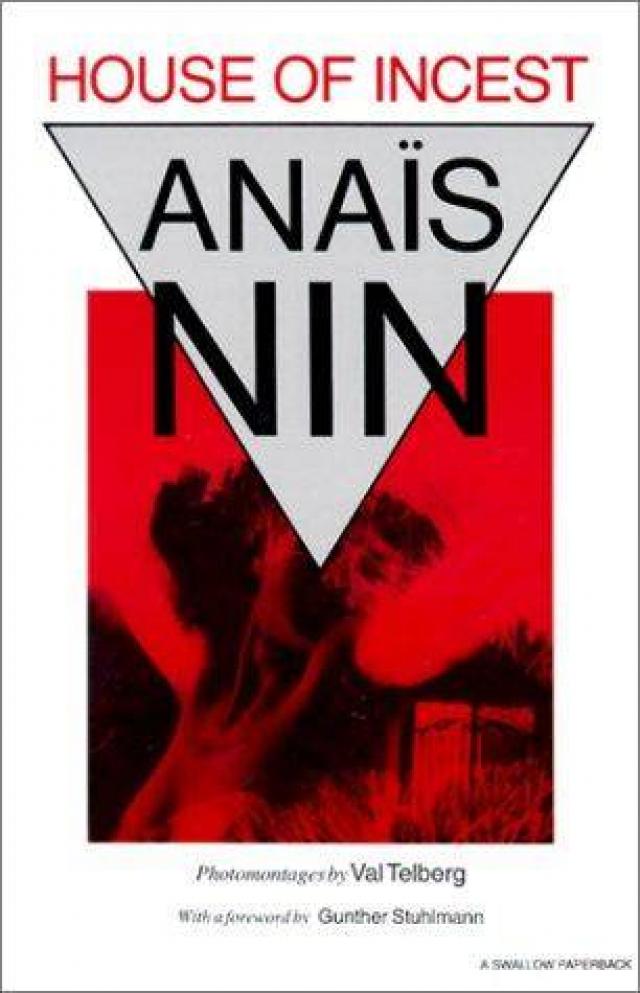
Originally published in 1936, House of Incest is Anaïs Nin’s first work of fiction. The novel is a surrealistic look within the narrator’s subconscious mind as she attempts to escape from a dream in which she is trapped, or in Nin’s words, as she attempts to escape from “the woman’s season in hell.” In the documentary Anaïs Observed , Nin says House of Incest was based on dreams she’d had for more than a year. Nin’s usage of the word incest in this case is metaphorical, not literal. In this book the word incest describes a selfish love where one can appreciate in another only that which is similar to oneself. One is then only loving oneself, shunning all differences. At first, such a self-love can seem ideal because it is without fear and without risk. But eventually it becomes a sterile nightmare. Review FB2Library.Elements.CiteItem
Read online
  • 5
183