Oxford Blood

Oxford Blood

Antonia Fraser

History / Literature & Fiction / Biographies & Memoirs

In this tale Jemima is reluctantly shooting a TV exposé — "Golden Lads and Girls" — on the exotic lifestyles of overprivileged undergraduates. Among them is Lord Saffron, the wealthy, twenty-year-old heir to the former foreign secretary. When a confession by a dying midwife throws Saffron's birth and bloodline into doubt, Jemima's interest in the documentary perks up considerably. Then a student is murdered, drawing Jemima into a case that will demand the utmost of her skills of detection.
Read online
  • 1 200
Mary Queen of Scots

Mary Queen of Scots

Antonia Fraser

History / Literature & Fiction / Biographies & Memoirs

Author of Marie Antoinette She was the quintessential queen: statuesque, regal, dazzlingly beautiful. Her royal birth gave her claim to the thrones of two nations; her marriage to the young French dauphin promised to place a third glorious crown on her noble head. Instead, Mary Stuart became the victim of her own impulsive heart, scandalizing her world with a foolish passion that would lead to abduction, rape and even murder. Betrayed by those she most trusted, she would be lured into a deadly game of power, only to lose to her envious and unforgiving cousin, Elizabeth I. Here is her story, a queen who lost a throne for love, a monarch pampered and adored even as she was led to her beheading, the unforgettable woman who became a legend for all time.
Read online
  • 1 047
Political Death

Political Death

Antonia Fraser

History / Literature & Fiction / Biographies & Memoirs

When the wayward lady Imogen Swain summons journalist Jemima Shore to her home, Jemima once again finds herself in the thick of love affairs--old and new--intrigue, and betrayal. For the colorful Lady Imogen kept diaries documenting her passionate affair with a rising young politician who has since risen to high ranks in the government. Increasingly eccentric as the years have passed, Lady Imogen now threatens to reveal details of the affair, and of the subsequent and unsolved disappearance of a young journalist. Jemima's meeting with Lady Imogen is the first step in a sinister series of events which will remind the reader why Antonia Fraser is the reigning queen of murder--British style!
Read online
  • 1 045
Cromwell

Cromwell

Antonia Fraser

History / Literature & Fiction / Biographies & Memoirs

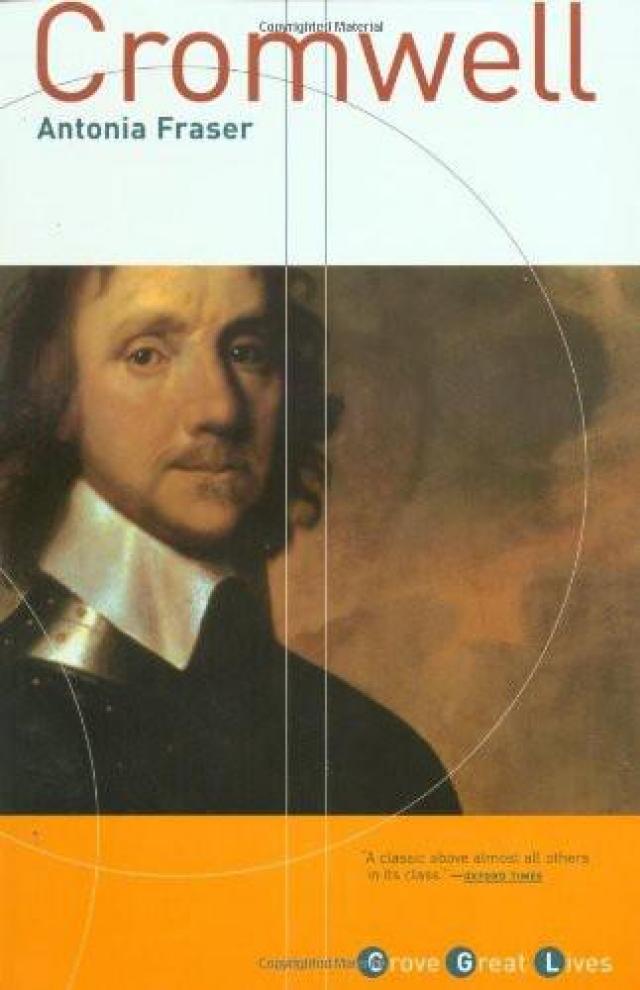
In Cromwell, award-winning biographer Antonia Fraser tells of one of England's most celebrated and controversial figures, often misunderstood and demonized as a puritanical zealot. Oliver Cromwell rose from humble beginnings to spearhead the rebellion against King Charles I, who was beheaded in 1649, and led his soldiers into the last battle against the Royalists and King Charles II at Worcester, ending the civil war in 1651. Fraser shows how England's prestige and prosperity grew under Cromwell, reversing the decline it had suffered since Queen Elizabeth I's death.
Read online
  • 921
The Weaker Vessel: Women's Lot in Seventeenth-Century England

The Weaker Vessel: Women's Lot in Seventeenth-Century England

Antonia Fraser

History / Literature & Fiction / Biographies & Memoirs

Just how weak were the women of the Civil War era? What could they expect beyond marriage and childbirth in an age where infant and maternal mortality was frequent and contraception unknown? Did anyone marry for love? Could a woman divorce? What rights had the unmarried? What expectations the widows? An expert on the period, Antonia Fraser brings to life the many and various women she has encountered in her considerable research: governesses, milkmaids, fishwives, nuns, defenders of castles, courtesans, countesses, witches and widows.
Read online
  • 896
Marie Antoinette: The Journey

Marie Antoinette: The Journey

Antonia Fraser

History / Literature & Fiction / Biographies & Memoirs

Brilliantly written, a work of impeccable scholarship. An utterly riveting and intensely moving book by one of our finest biographers. Never before has the life of Marie Antoinette been told so intimately and with such authority as in Antonia Fraser's newest work, Marie Antoinette: The Journey. Famously known as the eighteenth-century French queen whose excesses have become legend, Marie Antoinette was blamed for instigating the French Revolution. But the story of her journey begun as a fourteen-year-old sent from Vienna to marry the future Louis XVI to her courageous defense before she was sent to the guillotine reveals a woman of greater complexity and character than we have previously understood. We stand beside Marie Antoinette and witness the drama of her life as she becomes a scapegoat of the Ancien Regime when her faults were minor in comparison to the punishments inflicted on her. The youngest daughter, fifteenth out of sixteen children, of Austrian empress Maria Teresa and Francis I, Marie Antoinette was sent on a literal journey by her mother from Vienna to Versailles with the expectation that she would further Austrian interests at all times. Yet, Marie Antoinette was by nature far from interested in state affairs and much more inclined to exert a gracious, philanthropic role, patronizing the arts especially music, as royalty would come to behave in the nineteenth century. Despite this the French accused her of political interference and wrote scandalous tracts against her, mocking her lack of sophistication. Meanwhile, longing for a family and the birth of an heir who would have cemented the Franco-Austro alliance, the French queen had to endure more than eight years of public humiliation for her barren marriage before the delivery of her first of four children. As these problems unfold, Antonia Fraser also weaves a richly detailed account of Marie Antoinette's other, more poignant journey: from the ill-educated and unprepared girl who sought refuge in pleasure as a consolation into a magnificent, courageous woman who defied her enemies at her trial with consummate intelligence, arousing the admiration of even the most hostile revolutionaries. Brilliantly written, Marie Antoinette is a work of impeccable scholarship. Drawing on a wealth of family letters and other archival materials, Antonia Fraser successfully avoids the hagiography of some the French queen's admirers and the misogyny of many of her critics. The result is an utterly riveting and intensely moving book by one of our finest biographers.
Read online
  • 830
Cool Repentance

Cool Repentance

Antonia Fraser

History / Literature & Fiction / Biographies & Memoirs

Celebrated actress Christabel Cartwright trades her country house, its staff of servants, and her husband for a reckless affair. She also thought she could resume her career--her director was delighted, and so was Megalith Television. But one person in Christabel's circle had doubts. What happens next is murder, and it brings Jemima Shore, the author's elegant alter ego, into the fray. She trails her man (or is it woman?) through the thickets of human emotion. Cover Artist: Tom Hallman
Read online
  • 806
My History: A Memoir of Growing Up

My History: A Memoir of Growing Up

Antonia Fraser

History / Literature & Fiction / Biographies & Memoirs

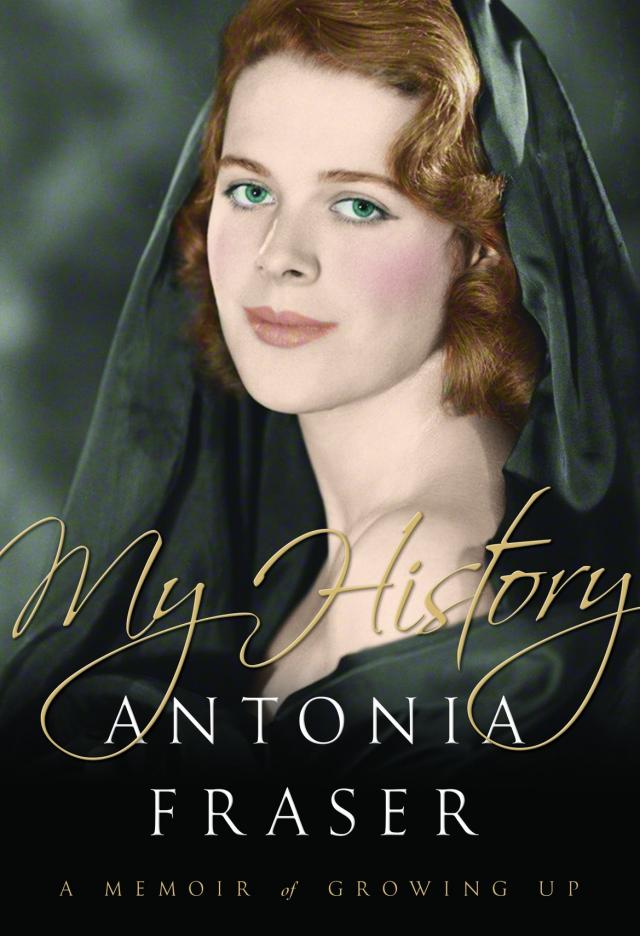
The acclaimed New York Times bestselling author shares vivid memories of her childhood and recalls the experiences that set her on the path to a writing life. Ever since she received Our Island Story by H. E. Marshall as a Christmas present in 1936, Antonia Fraser's deep love of history has been a constant in her remarkable life. The book made such an impression that it inspired her to write Mary, Queen of Scots thirty years later. Born into British aristocracy, the author's idyllic early childhood was interrupted by a wartime evacuation to North Oxford. The relocation had profound effects on her life, not the least of which was her education at a Catholic convent and her eventual conversion from the Protestant faith to Catholicism. Her memories of holidays spent at Dunsany Castle and Pakenham Hall, a stint as "Miss Tony" selling hats in a London department store, and her early days working in publishing are all told in her singular, irresistible voice. My History is a heartfelt memoir that is also a love letter to a British way of life that has all but disappeared. Anglophiles, history lovers, and Downton Abbey fans are sure to be enthralled.
Read online
  • 501
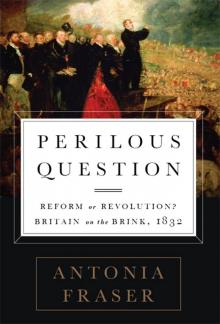
Perilous Question: Reform or Revolution? Britain on the Brink, 1832

Perilous Question: Reform or Revolution? Britain on the Brink, 1832

Antonia Fraser

History / Literature & Fiction / Biographies & Memoirs

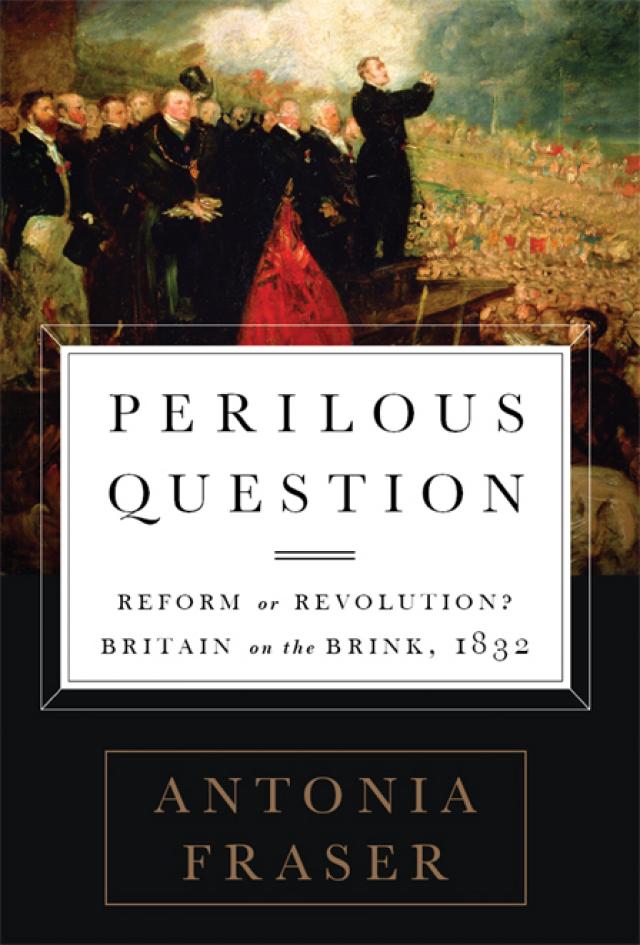
Antonia Fraser’s Perilous Question is a dazzling re-creation of the tempestuous two-year period in Britain’s history leading up to the passing of the Great Reform Bill in 1832, a narrative which at times reads like a political thriller. The era, beginning with the accession of William IV, is evoked in the novels of Trollope and Thackeray, and described by the young Charles Dickens as a cub reporter. It is lit with notable characters. The reforming heroes are the Whig aristocrats led by Lord Grey, members of the richest and most landed cabinet in history yet determined to bring liberty, which would whittle away their own power, to the country. The all-too-conservative opposition was headed by the Duke of Wellington, supported by the intransigent Queen Adelaide, with hereditary memories of the French Revolution. Finally, there were revolutionaries, like William Cobbett, the author of Rural Rides, the radical tailor Francis Place, and Thomas Attwood of Birmingham, the charismatic orator. The contest often grew violent. There were urban riots put down by soldiers and agricultural riots led by the mythical Captain Swing. The underlying grievance was the fate of the many disfranchised people. They were ignored by a medieval system of electoral representation that gave, for example, no votes to those who lived in the new industrial cities of Manchester, Leeds, Sheffield, and Birmingham, while allocating two parliamentary representatives to a village long since fallen into the sea and, most notoriously, Old Sarum, a green mound in a field. Lord John Russell, a Whig minister, said long afterwards that it was the only period when he genuinely felt popular revolution threatened the country. The Duke of Wellington declared intractably in November 1830 that “The beginning of reform is the beginning of revolution.” So it seemed that disaster must fall on the British Parliament, or the monarchy, or both. The question was: Could a rotten system reform itself in time? On June 7, 1832, the date of the extremely reluctant royal assent by William IV to the Great Reform Bill, it did. These events led to a total change in the way Britain was governed, and set the stage for its growth as the world’s most successful industrial power; admired, among other things, for its traditions of good governance—a two-year revolution that Antonia Fraser brings to vivid dramatic life.
Read online
  • 456
183